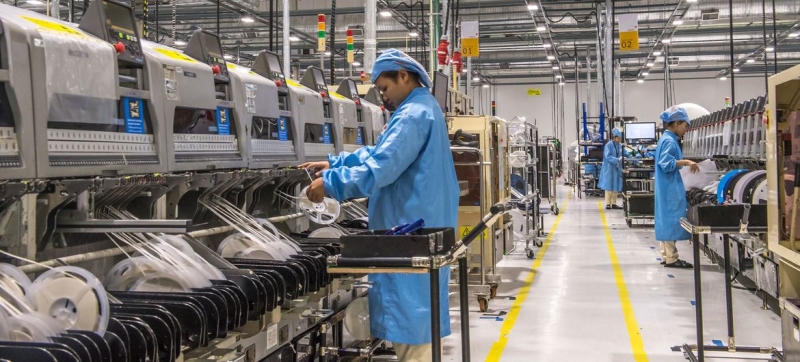

© ADB/A. Javellana The world’s twenty largest economies accounted for more than 80 percent of all global investment. Global investment rates have begun to pick up, but the recovery remains fragile and narrowly focused Economic development
After a two-year decline, global foreign direct investment flows rose six percent in 2025, reaching $1.6 trillion. However, as the authors of the UN Conference on Trade and Development (UNCTAD) report published on Tuesday emphasize, this trend is neither sustainable nor uniform: investment is growing, but not everywhere and not for everyone.
Developed economies increased capital inflows by 11 percent, while developing countries were able to add only two. On the surface, it looks like a return to growth, but the numbers hide a much more complex picture: It’s not just how much money is moving across borders, but also where exactly it’s going and what opportunities it’s opening up.
Selective Recovery
The world’s twenty largest economies accounted for more than 80 percent of all global investment, a figure that runs throughout the report. Capital is concentrated in a limited number of countries, industries and projects, which means that most of the world remains on the periphery of the investment process. Increasingly, large amounts of investment do not translate into new factories, infrastructure, jobs or technology transfer. Developing countries as a whole received more than half of global financial inflows, but the growth was highly uneven. Asia retained its status as the largest recipient, receiving $644 billion. Latin America and the Caribbean received 14 percent more than a year earlier, with foreign investment reaching $188 billion. Africa received about $70 billion, less than the record year of 2024, but still a third higher than the average for the previous decade and a half. Least developed countries increased their inflows of investment by 21 percent, to $43 billion, but their share of the global total remains tiny at just 2.7 percent, with the bulk of investment concentrated in a few resource-based economies. The concentration of resources is particularly noticeable in strategic sectors – artificial intelligence, the semiconductor industry, the extraction of critical minerals and the development of energy transition technologies. These areas accounted for 44 percent of the value of all new projects in 2025, while in 2020 this share was only 16 percent. Growth was driven primarily by data centers, followed by oil and gas projects and chip manufacturing. Most other industries, including green energy, showed decline. Governments, the report says, are increasingly interfering with the distribution of investment flows. In 2025, countries adopted a record 229 investment policy measures. While most have been favorable to investors, a growing number of decisions are aimed at supporting strategic industries, strengthening national economic priorities and protecting economic security.
Outlook and Concerns
The outlook for 2026 remains challenging, with investor decisions continuing to be weighed down by trade policy uncertainty, geopolitical tensions, conflict, high financial costs and the growing fragmentation of the global economy. At the same time, competition for projects in strategic sectors is intensifying as governments seek to secure future sources of growth and technological advantage. These findings will inform discussions at the UNCTAD World Investment Forum, which will take place in Doha from 25 to 27 October. Government officials, investors and development partners will look for ways to transform the selective investment landscape into broader development opportunities.