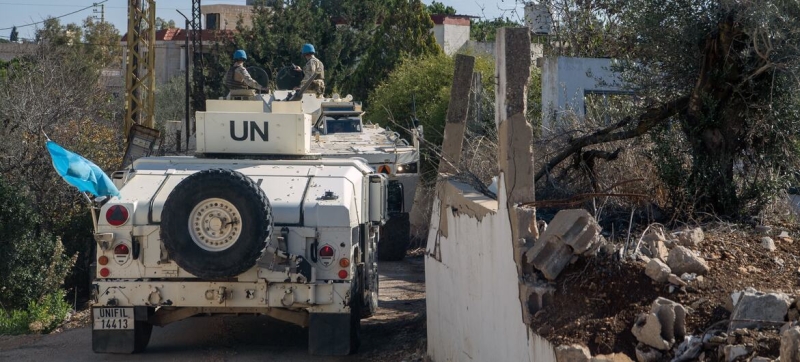

Photo UNIFIL/P. Gorris UNIFIL patrol in southern Lebanon. The UN welcomed reports of a ceasefire agreement between Israel and Hezbollah Peace and Security
The United Nations welcomed reports of a new ceasefire between Israel and Hezbollah on Friday.
UN spokesman Stephane Dujarric told reporters at a briefing in New York that the UN calls on all sides to “cease hostilities, respect existing ceasefire agreements and continue dialogue.” (OCHA) condemned the escalation of the conflict in Lebanon: Israeli airstrikes in the south of the country, targeting Hezbollah militants, have reportedly killed at least 18 people.
“We are following the reports last night with great concern… We think that more fighting will not help anyone,” Jens said Laerke.
“Just one or two days of this type of fighting translates into months, sometimes even years, of humanitarian operations on the ground,” he added. including in the context of the recent preliminary peace agreement concluded by the United States and Iran.
As UN spokesman Stephane Dujarric told reporters, peacekeepers of the UN Interim Force in Lebanon (UNIFIL) continue to monitor the situation, as well as provide humanitarian support to people who were forced to leave their homes due to fighting between Israeli troops and militants “Hezbollah”.
Peacekeepers continue to monitor extensive Israeli ground activity throughout the mission’s area of responsibility. Dujarric noted that two Israeli tanks blocked the movement of a UNIFIL convoy in the Tiri area on Wednesday. One of the tanks aimed a gun at the peacekeepers’ vehicle, and the servicemen gestured to the convoy to stop, forcing the patrol to reverse. The convoy was later allowed to proceed to its destination via an alternative route.
“We reiterate that UNIFIL peacekeepers must have unrestricted freedom of movement throughout the area of operations as they carry out work on behalf of the Security Council,” Dujarric said.
60~p>Meanwhile, UN Coordinator in Lebanon Imran Riza, with the head UNIFIL Major General Diodato Abanyara held talks in Beirut with Lebanese President Joseph Aoun and Parliamentary Speaker Nabih Berri.
“General Abanyara stressed that UNIFIL – in close coordination with the Lebanese Armed Forces – remains committed to supporting the full implementation of resolution 1701, which serves as the basis for restoring stability and security in the south of the country,” Dujarric said. UNIFIL facilitated nine humanitarian missions in the western sector of the area of operations. UN Office for the Coordination of Humanitarian Affairs (OCHA) head Tom Fletcher announced an additional $12 million from the Central Emergency Response Fund to help hundreds of thousands of people displaced by the conflict. “These funds will help ensure access to health care and protection from gender-based violence, as well as other critical services,” said Dujarric. “They will also address the growing food shortages that we are seeing among some of the displaced population in Lebanon.” Almost 50,000 people have returned to their homes since the ceasefire was declared, according to OCHA, but more than 106,000 Lebanese are still in collective centers across the country, and many are seeking refuge elsewhere. Ongoing instability, widespread destruction and limited access to basic services continue to prevent the return of large parts of the population.