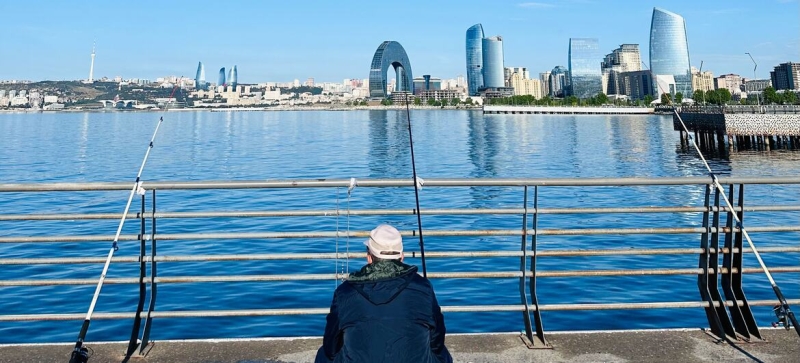

UN News Service Caspian Sea in Baku, Azerbaijan. World Environment Day: protect environmental activists and save the Caspian Sea Climate and Environment
The main international events on the occasion of World Environment Day, which is celebrated annually on June 5, will take place in Azerbaijan in 2026. Its capital, Baku, became the official global platform for the holiday.
This year’s campaign, organized by the United Nations Environment Program (UNEP), is under the slogan #NowForClimate and is focused on finding ways to overcome the climate crisis.
The Battle to Save the Caspian Sea
One of the central topics on the climate agenda in the region remains the rapid shallowing of the Caspian Sea, the world’s largest enclosed body of water. Its retreat is clearly visible in satellite imagery, with miles of exposed sandbanks cutting off seaports and fishing villages from the water as it recedes further from the coastline.
Scientific predictions are bleak: there is strong evidence that water levels will continue to decline significantly over the next 50 years, directly affecting the lives and well-being of millions of people in the five riparian countries. The main catalyst for this process is global warming, which leads to intense evaporation of water.
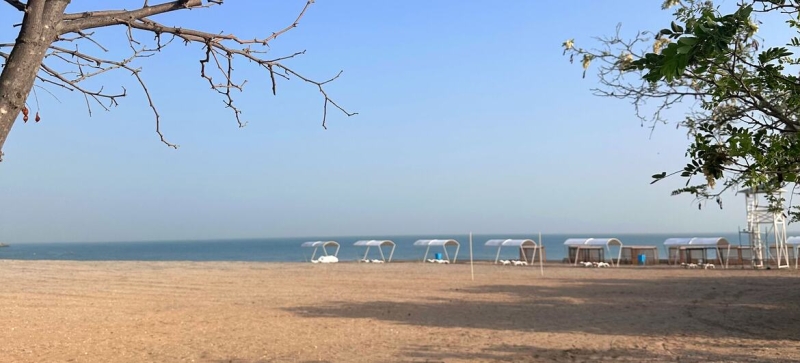
UN News Service The shore of the Caspian Sea in Avaza, Turkmenistan.
In addition to the severe economic consequences for humans, a unique ecosystem is at risk. The Caspian Sea is home to several endangered species, including 90 percent of the planet’s remaining sturgeon population. Due to falling sea levels, fish are already having difficulty finding access to the river deltas where they need to travel upstream to spawn.
In 2003, all five coastal states signed the Framework Convention for the Protection of the Marine Environment of the Caspian Sea (Tehran Convention), which provides the basis for environmental protection and sustainable development region.
“For many people, the Caspian Sea is part of their identity, their memory, traditions and way of life. Its protection is our common duty. I am convinced that we must act now – collectively and responsibly, so that this story continues,” said Faig Mutallimov, Senior Advisor to the Office of the Presidential Representative of Azerbaijan on Climate Affairs. emphasized that the planet is sending humanity increasingly alarming signals.
“The last eleven years have been the hottest in the history of meteorological observations. The damage this causes goes far beyond just rising temperatures, from air pollution to land degradation, ecosystem destruction and loss of biodiversity. “This is harming people’s health, destroying homes and exacerbating hunger,” the UN chief said.

© UNICEF/R. Maharjan Drought in Nepal.
Guterres warned that the world was rapidly moving toward temporarily exceeding the 1.5 degree warming threshold. Since every tenth of a degree brings new destruction – especially for the most vulnerable segments of the population – the key task of the global community is to minimize this excess and quickly return indicators to normal.
The Secretary-General identified sharp reductions in emissions, accelerating a just transition from fossil fuels to renewable energy, and rapidly reducing methane emissions as the only sustainable path to energy security. He also reminded developed countries of the need to meet their financial obligations to developing countries to save lives and strengthen economies.
Protect Defenders
Speaking at the first European Environmental Human Rights Forum in Strasbourg, UN High Commissioner for Human Rights Volker Türk recalled that temperatures in Europe are rising twice as fast as the global average. In addition, 95 percent of residents of European cities are forced to breathe air that does not meet safety standards. More than 80 percent of natural habitats in Europe are in poor or critical condition.
At the same time, Türk drew attention to a dangerous paradox: while declaring ambitious environmental goals, some European countries are passing laws that criminalize peaceful protests by activists. People who protect the future of new generations are judged under articles intended to combat terrorism and organized crime.
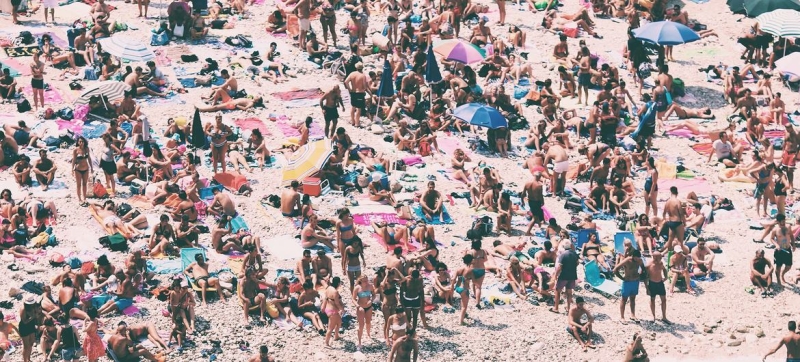
Unsplash/D.Daniel In Europe, temperatures are rising twice as fast as the global average
Over the past 15 years, there have been more than 1,300 “chilling” lawsuits in Europe, the purpose of which is to financially deplete small NGOs and intimidate them into refusing further action.
The global situation looks even more dire: over the past three years, the UN Human Rights Office has documented nearly 600 cases of killings or disappearances of environmental activists and land defenders. In at least 55 countries, people have been jailed for their environmental activism, and 90 percent of environmentalists have faced harassment and threats online.
“When our home—our planet—is burning, we cannot punish the firefighters who try to put out the flames. We must support them and give them an instrument of protection – human rights,” said Turk.
Cities against extreme heat
In preparation for World Environment Day, UNEP, together with the City Hall of Paris, launched a large-scale initiative “50@50”. More than 50 cities around the world, including Paris, Antalya, Lagos, Melbourne and Yangzhou, have come together to combat one of climate’s deadliest risks: extreme heat.
Extreme heat waves claim nearly half a million lives each year. The 50@50 project is designed to help local leaders quickly implement proven solutions: cool islands and green spaces, drinking fountains and cooling centers, heat wave early warning systems, and reflective materials in urban design. Over the next year, with support from UNEP and the C40 climate group, participating cities will stress test their systems to withstand 50-degree heat.