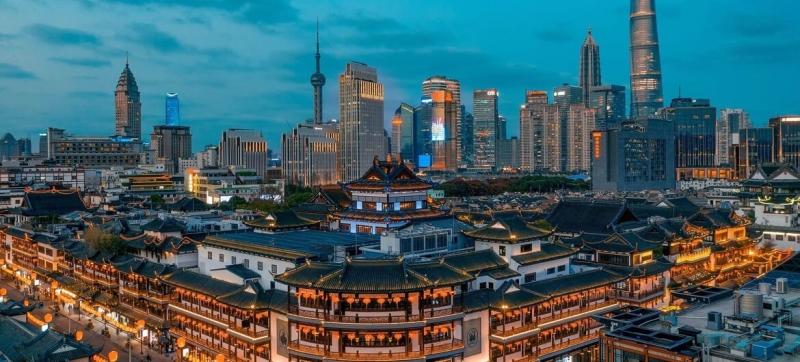

SMG International Smart cities must be human-oriented, according to the UN. In the photo – Shanghai. How to make the “smart city of the future” comfortable for everyone? Economic development
From artificial intelligence-powered transportation systems and digital twins to flood-proof parks, today’s megacities are embracing technology on an unprecedented scale. However, as innovative urban development accelerates, experts warn that the determining factor in whether technologies will bring real benefits will be principles such as inclusivity, safety, and the trust of citizens in these innovations.
At a large-scale urban exhibition in Baku, visitors stood transfixed in front of giant digital screens. They alternated with flood simulations, images of metro control systems and virtual copies of entire residential areas. At this platform, cities from around the world presented their vision of a future where life is transformed by artificial intelligence, digital infrastructure and real-time data. This is how many governments today envision the “city of the future.”
The Shanghai Experience
Few metropolises in the world illustrate the scope of smart city ambitions as vividly as Shanghai. At the China Pavilion at the 13th session of the World Urban Forum (WUF13) in Baku, officials demonstrated how the city is using big data and AI to create a unified network management platform. It is a system that integrates transportation, infrastructure, emergency services and government services.
At the same time, Shanghai is striving to overcome the digital divide. Through the city’s one-stop public services portal, residents can access more than 3,500 different services online.
Shanghai’s transport system is another window to the future. The Shanghai metro is one of the largest in the world: it has more than 400 stations, and the total length of tracks exceeds 800 kilometers. Safety is ensured and disruptions are minimized thanks to AI-based monitoring, 5G connectivity and predictive climate control technologies.
Several metro lines already operate fully automatically, without drivers. AI systems scan tunnels for cracks, water leaks and structural damage, and passenger flow data is analyzed in real time, preventing collapses throughout the network.
Perhaps the most impressive example is the Lingang Starry Sky Sponge Park. (Lingang Starry Sky). The 54-hectare site combines space-age landscaping with advanced water management technologies. Thanks to permeable paths, underground filtration systems and smart drainage, the park is able to absorb, purify and return up to 15 thousand cubic meters of rainwater daily.
People are the focus
Anaklaudia Rossbach, executive director of UN-Habitat (the UN Human Settlements Programme, which co-organizes the forum with Azerbaijan), warned that modern cities face many challenges, from housing shortages and slum sprawl to extreme weather events. “We need to make the most of all available technologies,” she said. she.
However, Rossbach stressed that technology alone is not enough.
“The most important thing is that smart cities are people-centric,” she said, explaining that human rights, inclusion and social equality must remain the main pillars of digital transformation.
She also pointed out the problem of digital isolation. During the COVID-19 pandemic, many residents of informal settlements (slums) found themselves cut off from the education system and basic services, they did not have the opportunity to work “remotely” – simply due to the lack of the Internet and access to digital technologies.
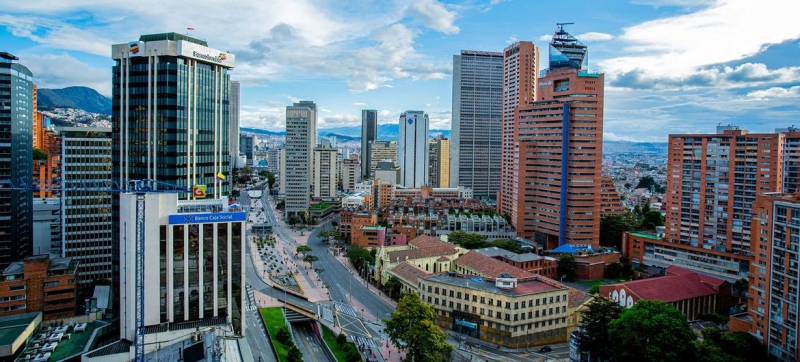
© Office of the Mayor of Bogota/Cristia Bogota, Colombia is recognized as a leader in urban innovation.
Who really benefits from technology?
And yet, while cities are actively implementing artificial intelligence and digital infrastructure, some researchers urge not to focus solely on the technical side of the issue. in an interview with UN News Service, Ginna Miljan, an architect and urban researcher from Colombia. She warned that depending on how it is used, technology can both empower people and become “a tool for total control.”
For many cities in the Global South – especially informal settlements, where there is often no basic infrastructure or reliable internet – the question is not the mere fact of the existence of advanced technologies, but whether they can actually improve people’s daily lives. day-to-day city management. “AI is no longer just a buzzword,” says Dmitry Atov, adviser to the Moscow government. “AI is a fundamental game changer for cities.”“World Models” – AI systems that simulate the behavior of cities and infrastructure in real conditions. drones and smart technology.
В Moscow already has one of the world’s largest digital twin systems. It is updated twice a year based on aerial photography and contains more than 9,000 analytical layers that are used for traffic flow modeling, infrastructure planning and future development.
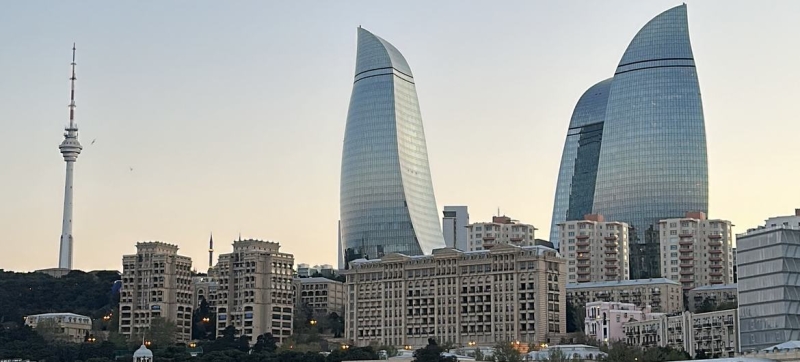
UN News Service The World Urban Forum takes place in Baku.
Hidden Threats
The more cities rely on digital communications, the more vulnerable they become. In Azerbaijan, officials say that as smart technologies are introduced, cybersecurity is becoming a key element of urban planning.
“Cyber attacks are not just a technical problem,” Aitaj Khalafly, a representative of the Azerbaijani government service for special communications and information security, told us. According to her, cybersecurity should be built into urbanization projects “even at the foundation stage.”
Her department is responsible for protecting critical infrastructure, monitoring threats and conducting penetration tests in government systems.
“A successful attack could lead to chaos in the country,” Khalafly warned, recalling that transport systems have already been the target of cyber attacks.
During discussions in Baku, UN experts time and again emphasized that trust, transparency and security must develop in parallel with innovation.
“Today, trust is no longer a luxury, it is an element infrastructure,” summarized Nicholas Yu, executive director of the Guangzhou Institute of Urban Innovation (China). intelligence.
“The concept of “smart” does not always mean the mandatory implementation of digital technologies or innovations. Sometimes it’s about smart planning, proper prioritization and understanding how urban infrastructure is interconnected,” said Dmitry Maryasin, Deputy Executive Secretary of the United Nations Economic Commission for Europe (UNECE). cyclists.
Ultimately, the real question is not how smart our cities can become, but who they are built for.