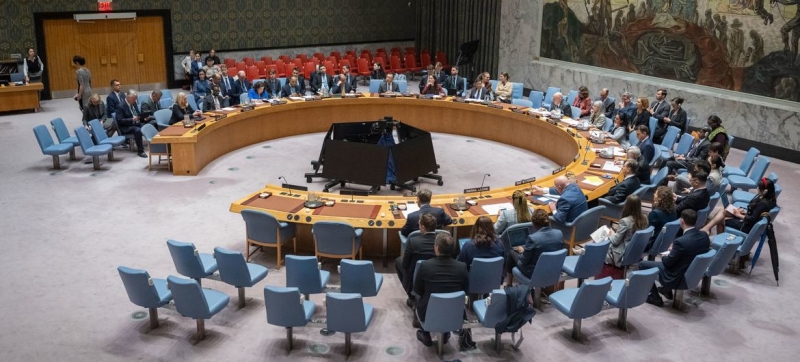

Photo UN/M. Elias Meeting of the UN Security Council (archive). The UN Security Council discussed the situation in Bosnia and Herzegovina Peace and Security
At a meeting of the UN Security Council in New York on Tuesday, the UN High Representative for Bosnia and Herzegovina, Christian Schmidt, said that despite overall stability, “potentially destabilizing tensions” remained in the country, causing him serious concern.
In his last report before leaving office, Schmidt warned of deliberate attempts by certain forces to destroy state institutions “by blocking them and making them unable to perform their functions.”
He outlined four key priorities for the current year: preserving the institutional order established by the Dayton Agreement; restoration of the functionality of government agencies; resolving the issue of distribution of state property; as well as the timely introduction of new electoral technologies in anticipation of the 2026 elections.
“The country barely escaped an armed conflict”
Speaking at a meeting of the Security Council, the Chairman of the Presidium of Bosnia and Herzegovina, Denis Becirovic, said that last year the country “barely escaped armed conflict.” He accused the leadership of Republika Srpska [an autonomous entity within Bosnia and Herzegovina – approx. ed.] in the “anti-Dayton policy,” which, according to him, brought the state to the brink of war. He added that the country had fulfilled the conditions for receiving an invitation to NATO, but stressed that progress would have been much faster without the “permanent blockades” from the Republika Srpska. integrity of Bosnia and Herzegovina and the Dayton Agreement, calling it “the cornerstone of peace and stability.” He stressed that the country needs “constitutional balance and functionality based on consent” and the future of Bosnia and Herzegovina must be determined by its “legitimate internal leaders” through dialogue and compromise.