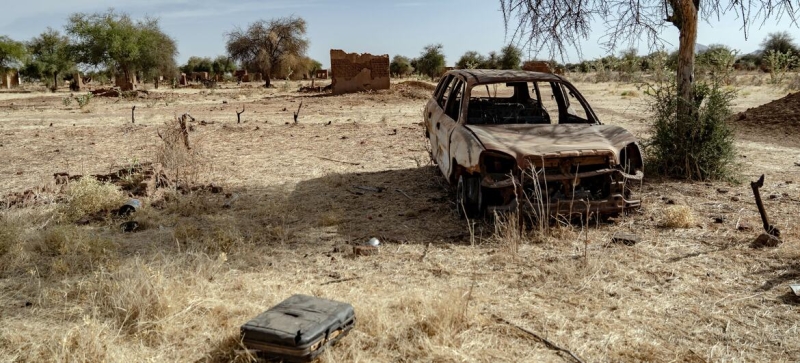

© UN Photo/G. Clark The warring parties have repeatedly attacked civilian targets and infrastructure in Sudan. Drones are the leading cause of civilian deaths in the war in Sudan Peace and Security
In the first four months of 2026, drones accounted for more than 80 percent of civilian deaths in Sudan’s war, with at least 880 people killed. These data were provided on Monday by the UN High Commissioner for Human Rights.
Volker Türk has warned that the growing drone war could lead to an even deadlier phase of the conflict. He strongly condemned the growing use of these weapons in the war between the Sudanese Armed Forces and the Rapid Reaction Force, which is now in its fourth year.
“The increasing dependence of [the parties to the conflict] on drones allows fighting to continue uninterrupted in the approaching rainy season, which previously led to a lull in ground operations,” the Supreme Commander said Commissioner.
Volker Türk warned of the possibility of further violence in the coming weeks “as parties seek to seize or consolidate control over territory amid the changing dynamics of the conflict.” This, in turn, could cause further population movements and disrupt the delivery of humanitarian aid.
“This cannot be allowed to happen,” he said. “The international community must understand that if action is not taken immediately, the conflict will be on the verge of a new, even deadlier phase.” The most recent such incident occurred on May 8, when 26 civilians were reportedly killed in strikes on Al-Quz in Southern Kordofan and near Al-Obeid in Northern Kordofan.
The warring parties have repeatedly targeted civilian targets and infrastructure, including markets, with at least 28 such attacks resulting in civilian casualties.
Medical facilities have been hit at least 12 times in four months. Some clinics have been forced to close, forcing people to travel long distances to seek care or go without it.
Fuel storage facilities and supply routes have also come under repeated attack in recent weeks.
Drone use is expanding
The use of drones by both parties is increasingly spreading beyond Kordofan and Darfur. The attack on Khartoum International Airport on May 4 led to the cessation of flights. Several targeted drone attacks occurred in other areas of the Sudanese capital.
“The intensity of these attacks has shattered the relative calm of recent months, as more civilians returned to the capital,” Turk said. “This has raised fears of renewed fighting in Khartoum.”
The High Commissioner added that a likely escalation in Kordofan would expose civilians to an increased risk of retaliatory attacks and new large-scale population movements.
Impact on humanitarian access
The High Commissioner warned that the escalation of violence would also disrupt the work of humanitarian organizations.
“Much of the country, including Kordofan, now faces an increased risk of famine and severe food shortages – a situation exacerbated by expected supply delays and fertilizer shortages due to the Gulf crisis,” he said he.
The UN’s top human rights defender called for decisive action to prevent the supply of any weapons to parties to the conflict in Sudan, including increasingly sophisticated attack drones.
“Drone attacks on civilian and civilian targets will only intensify if they go unpunished,” he stressed he.
Türk again called on all parties to ensure the protection of civilians, including safe exit from active combat zones. He also noted that civilians must be protected from reprisals, including extrajudicial killings, sexual violence, arbitrary detention and abductions.