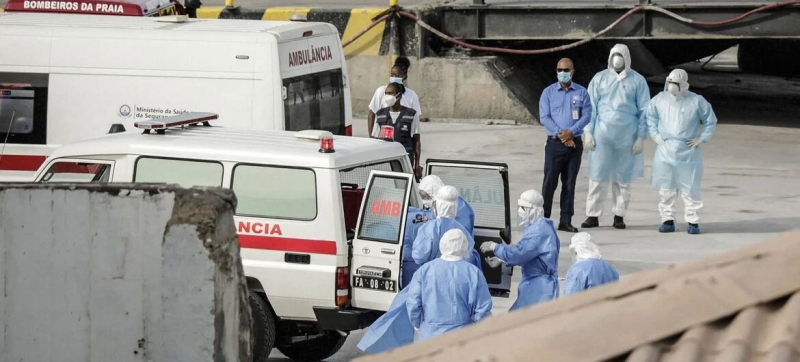

© WHO Medical evacuation of a hantavirus patient upon arrival in Cape Verde. WHO: Hantavirus outbreak on cruise ship is not “second COVID” Health
An outbreak of a deadly hantavirus aboard a cruise ship in the Atlantic Ocean poses a low risk to global health and is not “the start of a new pandemic.” This statement was made by the World Health Organization (WHO) on Thursday.
At the moment, three people have died, and several more have fallen ill. As part of the international response to the situation, experts from Europe, Africa and Latin America are involved.
The UK was the first to sound the alarm. In accordance with the International Health Regulations (IHR), London notified WHO of the outbreak after passengers traveling from Argentina to Cape Verde developed severe respiratory illness.
Speaking at a briefing in Geneva, WHO Director-General Tedros Adhanom Ghebreyesus said eight cases of the disease have been reported to date. Of these, five are laboratory confirmed, three more are being tested. All of them are caused by a rare strain of hantavirus “Andes” (Andes). Human infection usually occurs through contact with infected animals or their waste products (saliva, urine, droppings).
The Andes strain, found in parts of Latin America, is the only known type of hantavirus that can be transmitted from person to person. However, the likelihood of such a transfer is extremely low. According to WHO, this requires close and prolonged contact, which usually occurs within the family, between sexual partners or when caring for sick people.
“The overall public health risk remains low at this stage,” Ghebreyesus said.The WHO emphasizes that the current situation is fundamentally different from the 2020 coronavirus pandemic.
“This is not SARS-CoV-2. This is not the beginning of the COVID-19 pandemic,” said Maria van Kerkhove, WHO acting director for the prevention of epidemics and pandemics. “Hantaviruses have been known to us for a long time. We understand the nature of this virus. It does not spread like coronaviruses,” she added.
Investigation Progress
The first patient became ill on April 6 and later died on board the ship. His wife also fell ill and died after being evacuated to South Africa, where laboratory tests confirmed hantavirus infection.
It turned out that before boarding the ship, the couple traveled to Argentina, Chile and Uruguay as part of a bird watching tour. The route ran through the habitats of rodents – carriers of the virus.
Another passenger died on May 2. One man is in intensive care in South Africa, but his condition is improving, according to WHO. Other patients were transferred for treatment to hospitals in the Netherlands. At this time, the remaining passengers and crew on board are asymptomatic. WHO works closely with the authorities of Cape Verde, Spain, the Netherlands, South Africa, Great Britain and Argentina, as well as with the European Center for Disease Prevention and Control.
Spain agreed to accept the ship in a Canary Islands port after Cape Verdean authorities rejected the request due to security concerns. The WHO chief thanked Spanish Prime Minister Pedro Sánchez for his solidarity, adding that the risk to residents of the Canary Islands is assessed as extremely low.
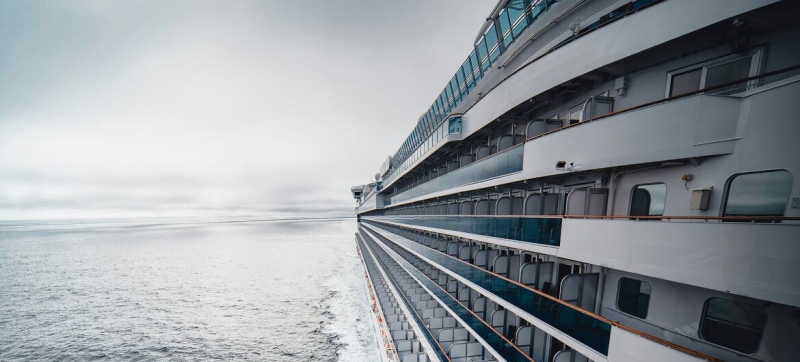
© Unsplash/I. Dean Passengers with hantavirus on a ship in the Atlantic Ocean could have become infected before boarding the ship.
Measures on board the ship
Earlier this week, a WHO expert, Dutch doctors and a European infectious disease specialist boarded the ship in Cape Verde. They oversee health screenings and infection prevention efforts.
WHO Representative in Cape Verde Anne Lindstrand told UN News Service that the organization has been supporting local authorities since its early days.
“We delivered the necessary medicines on board for the duration of the journey to the Canary Islands. If anyone gets sick, doctors will be ready to help immediately, they have everything they need,” she noted.
Authorities are also contacting passengers who disembarked earlier in Cape Verde, advising them to immediately see a doctor if the first symptoms appear. Those who remain on the ship are temporarily staying in their cabins while disinfection is carried out.
Combating disinformation
The head of the WHO department responsible for emergencies, Abdirahman Mahamoud, separately touched on rumors circulating on social networks. He stressed that there are no signs of the start of a pandemic.
Infection occurred in a confined space with prolonged contact, which is reminiscent of the limited outbreak of the Andes virus in Argentina in 2018–2019. The virus then spread at a social event where one sick person was present, and the chain of transmission was quickly broken.
Existing methods – contact tracing, isolation and monitoring – have proven effective. may still be detected, as the incubation period for the Andes hantavirus can be up to six weeks.
“Viruses are indifferent to politics and borders,” Ghebreyesus concluded. “Our best immunity is solidarity.”