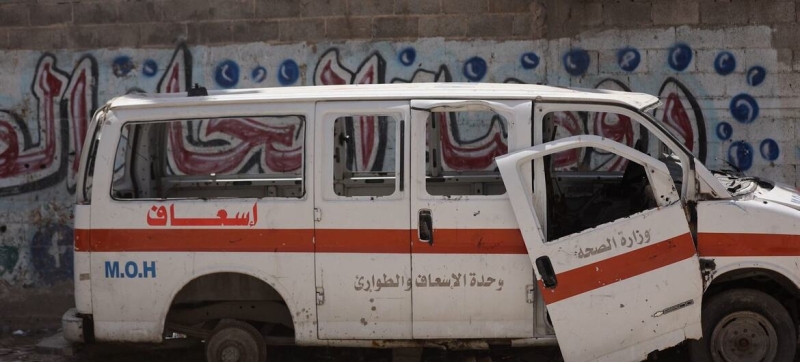

Damaged ambulance in Gaza City. WHO: Destruction in Gaza and shortage of medicines in Iran are exacerbating the consequences of war Humanitarian aid
Conditions in Gaza, where violence continues amid widespread destruction, are hampering efforts to rebuild the population, the World Health Organization (WHO) said on Friday. Meanwhile, demining experts warn that so far they have been able to “only slightly lift the curtain” on the extent of contamination of the enclave territory by unexploded ordnance.
Shortage of goods in Iran
In Iran, meanwhile, there is growing concern over a looming shortage of essential medical supplies. “The ceasefire announcement earlier this month was a welcome relief. But the reality on the ground is concerning,” said Christian Cortes Cardoza, deputy regional director for the Middle East and North Africa at the International Federation of Red Cross and Red Crescent Societies, a UN partner. He had just returned from Tehran.
Speaking to reporters in Geneva via video link from Beirut, Christian Cortez Cardoza stressed that “a ceasefire does not mean the end of the conflict.” He said the effects of weeks of “intense hostilities” will be felt by Iranian society for “many months and years to come.”
Hundreds of medical facilities in Iran have been damaged or destroyed, the speaker explained, and concerns are growing over access to medical care, and the destruction of manufacturing capacity could lead to shortages of key medical supplies such as dialysis machines and dentures.
Because of the war, the plant, which supplies 60 percent of the country’s needs for dialysis filters, has supplies of raw materials for only the next three months. health care.
“This applies both to large hospitals, such as Al Shifa in Gaza, and to small primary health care centers, clinics, pharmacies and laboratories,” said the new WHO representative for the occupied Palestinian territory, Reinhilde Van de Weerdt.
Speaking at a press conference in Jerusalem, she spoke about her first trip to Gaza in her new position. “I spent my first week there [in my new position] earlier this month. Nothing can prepare a person for such scale of destruction. You can read reports, study numbers, but standing on the street among endless multi-meter rubble is completely different,” the WHO representative noted.
Tents, ruins and rats
According to her, most Palestinian families are still unable to return to their homes. “They live in tents among the ruins, completely dependent on humanitarian aid… And despite the ceasefire, airstrikes, shelling and shooting continue,” said Reinhilde Van de Weerdt.
In addition, more than 17,000 cases of rodent-borne infections have been reported among internally displaced people, and skin diseases such as scabies are reported in more than 80 percent of accommodation sites, and lice and bedbugs are also common – “an unfortunate but predictable consequence of living among rubble,” the WHO noted. what diseases affect the population of Gaza. To do this, we need to deliver laboratory equipment and materials to the sector. As you know, they don’t go there, and this practically makes us blind,” Van de Weerdt emphasized. To cope with public health threats, the situation must change, she added.
“Medical facilities and health workers must be protected, and life-saving medicines and supplies must flow into Gaza. Bureaucratic procedures and restrictions on access to these globally recognized essential funds must be lifted,” the UN representative emphasized.
Remnants of War
These calls were also supported by the head of the UN Mine Action Service in the Occupied Palestinian Territory, emphasizing that unexploded ordnance poses a huge danger to the population throughout the enclave.
According to Julius Dirk Van der Walt, this deadly threat now awaits residents of the sector almost everywhere. “We have only just begun to understand the level of pollution that we face in Gaza,” he said.
Lebanon: Death of Indonesian Peacekeeper
The UN Interim Force in Lebanon reports the death of another peacekeeper who was seriously wounded in southern Lebanon last month. Corporal Rico Pramudia, 31, from Indonesia, died in a hospital in Beirut.
The UN expressed condolences to his family, as well as the Indonesian government and armed forces. The UN also recalled that an attack on the “blue helmets” is a gross violation of international law and can be qualified as a war crime. Lebanon for another three weeks in order to provide an opportunity for dialogue between Lebanon and Israel. He praised the United States’ contribution to this process and reaffirmed the UN’s readiness to support efforts towards peace.
António Guterres called on the parties to strictly adhere to the ceasefire, and also called on Hezbollah and other non-state groups to respect the decision of the Lebanese government to take control of the entire territory of the country and ensure the state’s monopoly on the use of violence.
Situation in the Strait of Hormuz: death of 10 sailors
According to the International Maritime Organization (IMO), at least 29 ships were attacked in the Strait of Hormuz, and 10 sailors were killed. The seizure of several ships along with their crews is also reported. IMO Secretary-General Arsenio Dominguez stated the need to ensure freedom of navigation in the Strait of Hormuz, calling on the parties to abandon actions that do not have a legal basis. He also called for the release of sailors – crew members of captured ships.