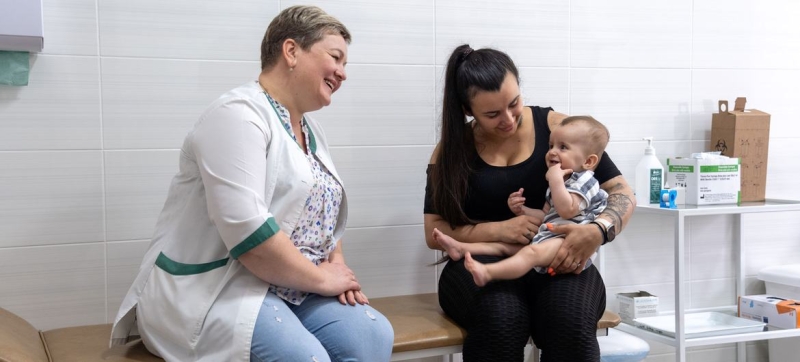

An eight-month-old child awaits vaccination at a medical center in the Shevchenkovsky district of Kiev. European Immunization Week: Vaccines save lives Health
Today marks the start of the twentieth European Immunization Week, as WHO celebrates progress in vaccination coverage over the past two decades and calls for greater efforts to maintain it.
European Immunization Week was first held in 53 countries in Europe and Central Asia in 2007 to raise awareness of every child’s right to protection against vaccine-preventable diseases. The campaign promotes public awareness and strengthens national immunization programs, improving public health outcomes.
Vaccinations are estimated to have saved approximately 154 million lives worldwide over the past half century. In the European Region, high levels of immunization coverage have significantly reduced the burden of infectious diseases. Thus, the region has remained free of endemic polio since 2002, has virtually eliminated rubella, and has also achieved significant reductions in the incidence of measles, diphtheria and mumps.
At the same time, countries in the region continue to expand immunization programs. In particular, almost all countries in the WHO European Region have included the human papillomavirus (HPV) vaccine in their national immunization schedules for the prevention of cervical cancer and other cancers.
Pregnant women can now also receive protection from such diseases such as whooping cough, influenza, COVID-19 and respiratory syncytial virus (RSV), which helps keep mothers and newborns healthy.
However, vaccination rates are declining in some countries, and large outbreaks of vaccine-preventable diseases are occurring more frequently. For example, in 2024, more than 298 000 cases of whooping cough were reported in the WHO European Region, the highest number on record. In the same year, the number of measles cases exceeded 127 thousand, reaching a maximum in the last 27 years.
This trend is associated with lack of public awareness, the spread of misinformation and declining trust in vaccines and health authorities. However, outbreaks also highlight uneven vaccination coverage and gaps in immunization programs and primary health care systems. This makes it particularly important to invest in immunization programs to ensure that gains are maintained and sustained.
UNICEF, WHO and the European Commission will continue to work with partners to address current immunization challenges and protect children and other vulnerable groups of the population. The message remains the same – vaccines work, save lives and protect public health.