

Chaloka Beyani (at the podium) speaks at the opening ceremony of the Flower of Srebrenica memorial dedicated to the victims of the 1995 genocide in Bosnia. UN warns of growing threat of genocide in the world International Law
The world is facing an alarming decline in respect for international law: armed conflicts are increasingly directed at civilians, and the risk of mass crime is growing rapidly. This was stated by the new UN Special Adviser on the Prevention of Genocide, Chaloka Beyani, in his first interview since his appointment in August this year.
Beyani recalled that his post was created by the UN Security Council after the tragedies in Rwanda and Srebrenica. Today, he said, parallels with current crises are obvious in many regions of the planet. “We are seeing massive violations of international human rights law, direct attacks on civilians and blatant disregard for humanitarian law. The risk of committing atrocities is extremely high,” he noted.
The adviser paid special attention to Sudan, where the conflict in Darfur has been ongoing for decades. “Basically, nothing has changed. The fall of the civilian government only deepened the crisis,” he said, recalling that back in the 1990s, the situation in the region was the focus of an investigation by a UN commission.
The role of international law
The Office for the Prevention of Genocide and the Protection of Civilians serves as an “early warning system” within the UN. He informs the Secretary-General, the Security Council and other structures when a risk of mass crime is identified. The office bases its work on the 1948 Convention on the Prevention and Punishment of the Crime of Genocide. It tracks developments in armed conflicts based on ethnic or religious grounds, the spread of hate speech and the erosion of the rule of law.
“Our task is not to study genocide, but to prevent it,” Beyani emphasized, adding that the final decisions in each case are made by international courts.
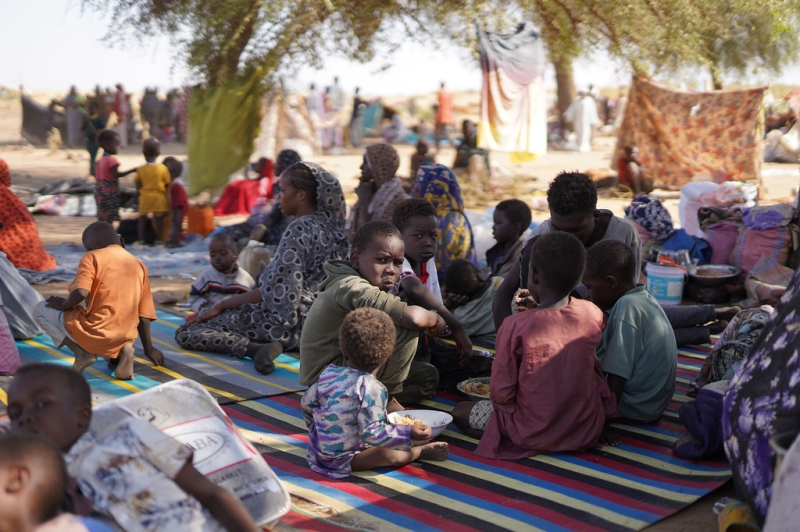
Camp for displaced people in Sudan.
Court precedents and liability
The Advisor noted the importance of effective justice systems to protect vulnerable groups. Beyani cited the 2012 conviction of Congolese warlord Thomas Lubanga by the International Criminal Court for using child soldiers. The verdict, he said, had forced other military leaders to publicly renounce similar practices.
Beyani also mentioned the International Court of Justice’s provisional measures in the South Africa v. Israel case involving the possible application of the Genocide Convention in Gaza, as well as the upcoming hearing of the Gambia v. Myanmar case. “Prevention includes punishing those responsible,” he emphasized.
New threats: disinformation and climate change
Among modern challenges, Beyani highlighted the growth of hate speech and disinformation on the Internet. His office is working with technology companies, including Meta and Google, as well as religious and community leaders to counter incitement to violence.
The adviser noted that climate change and environmental degradation are increasingly becoming catalysts for conflict. “We see tensions over resources – from the Sahel to small island states at risk of being submerged. Climate alone is not the cause, but it amplifies other risk factors,” he explained.
Indigenous peoples involved in disputes over land and natural resources are especially vulnerable in this situation. “Their identity and way of life make them especially vulnerable to threats,” Beyani noted.
Remember and Act
The adviser says his office focuses primarily on diplomacy and preventive measures. “It was created for non-public interaction, consultation with the Secretary-General and the Security Council, and official statements are made only when necessary,” he said.
Beyani stressed that preventing genocide requires not only decisive action, but also preserving the memory of the victims of past crimes.
“The promise of the UN must be remembered “never again” and the foundation on which the Genocide Convention stands. But this is not enough. We must strengthen response tools, build trust and act early,” the adviser emphasized.