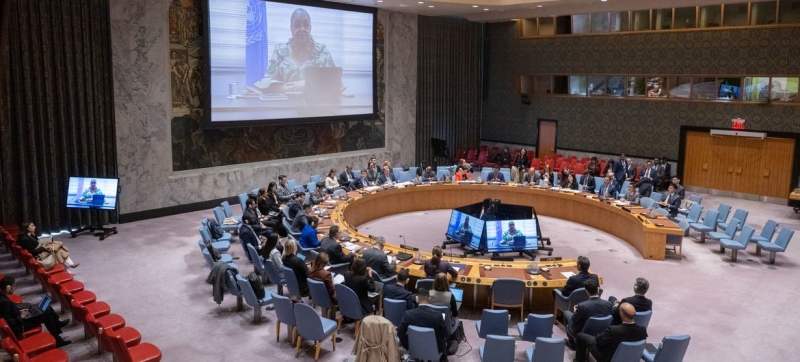

Meeting of the UN Security Council on the situation in Libya. UN special envoy warns of deepening political and economic crisis in Libya Peace and Security
Libya faces a deepening political, economic and institutional crisis that threatens the country’s unity and stability. The Special Representative of the UN Secretary-General for Libya warned about this, speaking at the Security Council on Wednesday. Hannah Tetteh called for urgent action to overcome the protracted political deadlock.
The special envoy said efforts to advance the UN-brokered political road map had stalled despite months of consultations between the Libyan parties. While structured dialogue on governance, security, economics and national reconciliation has produced proposals aimed at creating the conditions for national elections, key political institutions remain unable to reach agreement on key steps needed to move the process forward. Libya’s Supreme Council of State is undermining progress, and the unilateral actions of both structures are further weakening public trust in the authorities. Failure to agree on electoral mechanisms prolongs political uncertainty and increases citizens’ disillusionment with government institutions.
Despite the national political impasse, there have been some positive developments at the local level. Over the past 14 months, local elections have been held in 119 municipalities, marking an important step towards strengthening accountable local governance. Separately, the election of the second female mayor in the country’s history was noted as a sign of increasing women’s participation in political life. At the same time, Tetteh warned of a dangerous deepening of institutional divisions, especially in the judicial system. Competing constitutional courts in Tripoli and Benghazi have issued conflicting rulings, effectively creating parallel legal systems that threaten the country’s governance, government accountability, and the political process itself. Preserving the unity of the judicial system, she emphasized, is a key factor in maintaining the integrity of the state.
Economic difficulties
The economic situation in Libya is also rapidly deteriorating. The devaluation of the national currency, rising prices, fuel shortages and declining purchasing power are increasing pressure on the population. About 30 percent of Libyans are estimated to live below the poverty line, and the cost of food has risen significantly in recent years. The lack of a unified state budget and parallel government structures contribute to financial instability and undermine confidence in the economy.
Security Issues
Security issues remain a serious problem. Transnational criminal networks involved in drug trafficking, arms trafficking and human trafficking continue to exploit weak government institutions and poorly controlled borders. Recent reports have documented serious human rights violations against migrants, including the discovery of mass graves and signs of torture among freed people.
Despite numerous challenges, the UN mission is expanding its presence in Libya and strengthening support for economic reforms and the unification of security structures.
“The only way forward is political a solution that will unite Libyans,” Tetteh said, calling on the international community to continue to support efforts to restore stability in the country.