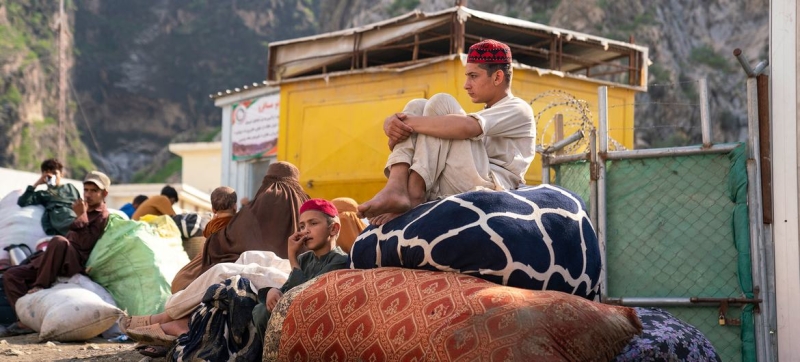

In 2025, more than 2.7 million Afghans returned to Afghanistan from neighboring countries. UN chief calls on Afghanistan and Pakistan to immediately stop fighting Peace and Security
Amid reports that major cities in Afghanistan have been bombed by the Pakistani military as the conflict between the two countries escalates, the UN is raising concerns about civilians already living in dire conditions under Taliban rule.
The UN Secretary-General said he was deeply concerned about the escalation. Antonio Guterres called for an immediate cessation of hostilities and repeated his call for the two countries to “resolve any differences diplomatically.”
Fear of the future
The call for dialogue between Kabul and Islamabad was also made by the independent UN Human Rights Council expert on Afghanistan, Richard Bennett, who noted that growing tensions between the two countries are exacerbating difficulties for Afghans forced to return home from neighboring countries, including Pakistan.
“I was recently in Pakistan and spoke with Afghans who are afraid future,” he said. “They believe that returning to Afghanistan not only means a life of poverty, but also for certain groups – human rights activists, journalists, former security forces – a real risk of violent retaliation. We have seen an increase in such cases in recent months.”
In recent years, Afghanistan has faced a massive return of its citizens – estimated at 2.7 million in 2025 alone – from neighboring countries.
Pakistan’s defense minister said Friday that his country is in “open war” with Afghanistan. It comes after months of sporadic border clashes – despite a ceasefire declared in October.
Humanitarian Difficulties
Bennett said the dramatic escalation would only worsen the suffering of Afghans already facing catastrophic humanitarian conditions since the Taliban returned to power in August 2021.
Health care is just one of the areas seriously affected by the harsh policies of the de facto authorities, whose decrees supposedly aimed at “strengthening religious virtue” are widely condemned outside the country as a form of gender apartheid.
“In many parts of the country, medical care is divided by gender: men are men,” Bennett said. – Across the country as a whole, there is a reduction in the number of health workers – not only doctors, but also midwives, nurses, all medical personnel.” movement.”
Bennett recalled that Afghanistan’s health system was fragile even before the Taliban took power, after decades of war, poverty and chronic underfunding. Now, he stressed, there is a risk of “a full-scale medical disaster, especially for women and girls.”