

Former UN Secretary General Ban Ki-moon at a meeting of the Security Council. The Security Council is discussing the role of the next UN chief in light of the “deepening crisis of multilateralism” UN
The Security Council is hosting an open debate on Monday on “Leadership for Peace,” focusing on the role of the future leadership of the United Nations in the face of growing geopolitical confrontation, weakening multilateralism and the crisis of the UN system itself. Former Secretary-General Ban Ki-moon and Fordham University international politics professor Anjali Dayal spoke during the meeting.
Ban Ki-moon noted that he was speaking not only as a former Secretary-General, but also as an honorary member of the Elders, a group founded by Nelson Mandela to promote peace, justice, human rights and sustainable development.
The Crisis of the UN System
Looking back, the former UN chief celebrated important milestones in his tenure as head of the UN. In particular, he called the Paris climate agreement “a triumph of human intelligence” and “a victory for multilateralism.” However, according to him, even then the international situation was overshadowed by the terrorist activities of ISIS (Daesh), the war in Syria, the refugee crisis, Brexit and the rise of populism, as well as nuclear tests and human rights violations in the DPRK. he said, acknowledging the heavy burden that his successor, current Secretary General António Guterres, has to bear.
According to Ban Ki-moon, today’s crisis is characterized by a deterioration in relations between major powers. He cited the “illegal incursion of a permanent member of the Security Council” into Ukraine, massive civilian casualties in Gaza, and weakening international cooperation amid the deepening climate crisis.
“As a result, this has become a crisis for the United Nations itself,” he stressed.
Reforms in UN
The former UN chief said that the Organization remains the “prime universal institution” promoting international cooperation, but its strength depends directly on the political will of member states. In this regard, he called for “change and vital reform of the UN” to overcome existing limitations.
Ban Ki-moon stressed that UN leadership must be “more confident in playing an active political role in diplomacy for peace,” including mediation and crisis management, and that member states must support this role by not allowing the strongest countries to impose their political decisions on everyone else.
Read also:
The UN Security Council discussed reforms of multilateral institutions
He also proposed introducing a single seven-year term for the Secretary-General, noting that the current practice of two five-year terms – which is not enshrined in the UN Charter, but is only a tradition – makes the head of the UN overly dependent on permanent members of the Security Council.
“Although I did not agree with the UN Secretaries-General being called “secular popes,” they still have moral authority,” said the former Secretary-General. “But they also need to have real power to mediate between conflicting parties, as well as to intervene more actively in cases of serious violations of international law and the UN Charter.” “The current crisis at the UN has many causes, but the continued failure of the Security Council to properly carry out its functions is the most glaring of them all,” he said. Abuse of the veto power by permanent members to benefit themselves or their allies undermines the UN’s mandate to maintain peace and security, leaving civilians unprotected and allowing impunity to persist, he said.
Ban Ki-moon warned that without reform, the Organization risks “sliding towards either collapse or loss of relevance.”
The consequences of a lack of funding
Professor Anjali Dayal also spoke at the meeting. She pointed to deep divisions among member states about the purpose of the UN, the future of the world order and faith in the basic principles of the Organization’s Charter. At the same time, according to her, the unfolding financial crisis in the UN will lead not only to a reduction in the structure, but also to a reduction in the amount of work “that only the UN is capable of performing on a global scale.”
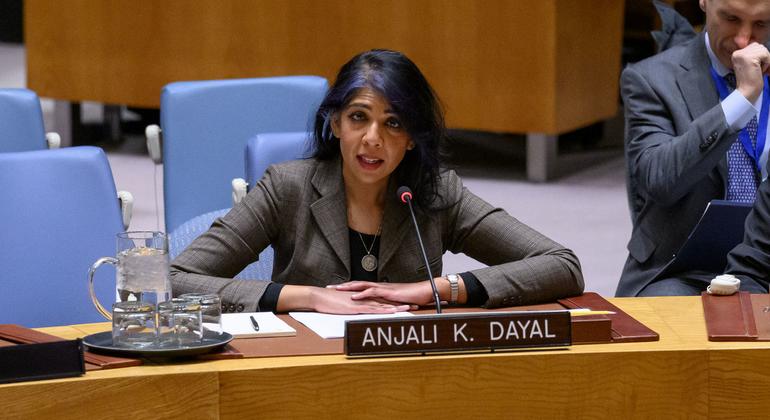
“That means fewer vaccinated babies around the world, less aid in disaster zones, less food for civilians caught in conflict, fewer cleared fields for children to play in,” Dial warned.
The next Secretary-General will lead an Organization “with significantly reduced capabilities,” according to a Fordham University professor. However, she continued, the very fact that discussions continued in the Security Council demonstrates that states still believe in the value of cooperation. She recalled that the creators of the UN founded it not out of naivety, but because they were “hardened by war and tired of mass death,” and quoted Dwight Eisenhower, who said that the Organization was “mankind’s last great hope of replacing the battlefield with the conference hall.”