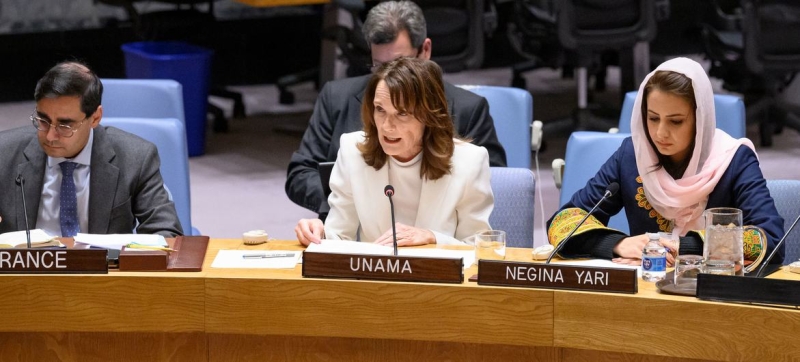

Georgette Gagnon at the Security Council. (Archive) INTERVIEW | How the UN is supporting Afghanistan in the face of regional escalation and severe resource shortages Peace and Security
In the east there are clashes with Pakistan, in the west there is a potential increase in the number of returnees from Iran, which has become the epicenter of a serious regional escalation. One could say that Afghanistan is caught between two fires, but the country has much more problems. Difficult economic and social situation, consequences of a powerful earthquake in 2025, chronic lack of funding for humanitarian operations. The list goes on.
Lyudmila Blagonravova asked Georgette Gagnon, acting head of the UN mission in this country, about how the UN is trying to help Afghanistan solve its most pressing problems. She will give a briefing to the Security Council on Monday.
LB: Given the situation around Iran, and the fact that more Afghans may return from Iran to Afghanistan in the coming months, how is the mission preparing to support the returnees and their hosts? communities?
JG: Together with UN agencies, we are already preparing various types of assistance in case Afghans begin to return from Iran to Afghanistan – to their homes and communities. UN agencies, in particular the UN Refugee Agency (UNHCR), the International Organization for Migration (IOM) and others, are already preparing both on the border with Iran and in host communities in different regions of the country.
This will be an extremely difficult task because more than four million people have already returned to Afghanistan in the last year and a half – from both Iran and Pakistan.
So both the de facto authorities in Afghanistan and the international community are trying to provide the necessary level of support for both local communities and the families who are returning.
LB: Now about what is happening in the east of the country. You have already mentioned Pakistan: there are clashes on the border between Afghanistan and Pakistan. How do these events affect the mission’s ability to carry out its mission, and what diplomatic and humanitarian measures need to be taken to prevent further escalation and deterioration of the situation? Both the UN Assistance Mission in Afghanistan and the UN Secretary-General have called on all parties to de-escalate, choosing the path of dialogue and protecting civilians.
Inside Afghanistan, we are seeing an increasing number of civilian casualties as a result of these clashes. In addition, we are seeing disruptions in the supply of humanitarian aid that arrives across the border.
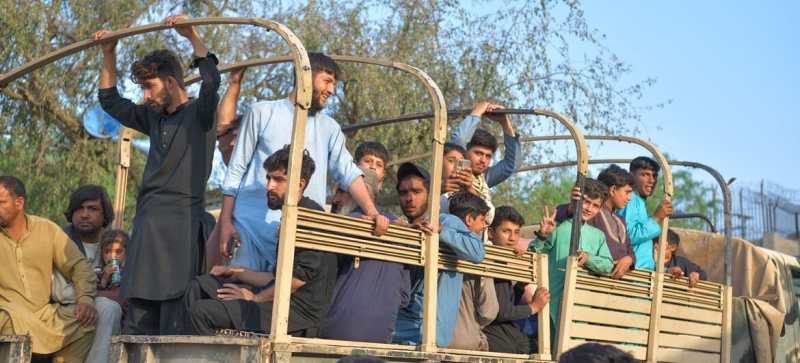
People returning from Pakistan to Afghanistan.
Overall, the border between Afghanistan and Pakistan has remained closed since October, and this is already having a humanitarian and economic impact on communities and people on both sides of the border.
That is why we continue to call for de-escalation and dialogue, and support the efforts of UN Member States who are offering mediation, and Pakistan and Afghanistan should take advantage of this opportunity.
LB: UN agencies warn that funding for humanitarian operations is rapidly declining. What are the biggest challenges the UN mission and agencies are currently facing, and what message would you like to send to donors? Funding is extremely limited. Humanitarian organizations have prepared a humanitarian response plan for 2026, in which they are requesting about $1.7 billion to support almost half of the country’s population.
The most pressing needs now are food, shelter and various types of health care, including assistance to women and children.
These are the key problems and main requests. We again remind donors that Afghanistan is the second largest humanitarian crisis in the world today. Increased funding is required to support populations and prevent serious consequences for people, the region and the country itself.
LB: How the UN prioritizes assistance when limited resources?
JG: The most vulnerable people and communities receive assistance first, followed by other types of support.
LB: Women and girls in Afghanistan still face severe restrictions in many areas – in education, in the labor market, in public life. What is the mission doing to defend their rights, and what levers exist in the current political conditions?
JG: The UN Assistance Mission in Afghanistan, together with others – Afghans, UN member states and UN agencies – is constantly and consistently seeking the lifting of restrictions, imposed on women and girls.
We emphasize again and again the consequences this has for the country: for its economy, for the future, for girls and women themselves, and for society as a whole.
These restrictions have serious economic, political and, of course, social consequences.
We also emphasize that this issue remains a key obstacle to Afghanistan’s eventual reintegration into the international system and its fulfillment of international obligations, a goal that the Security Council has indicated the country needs to achieve.