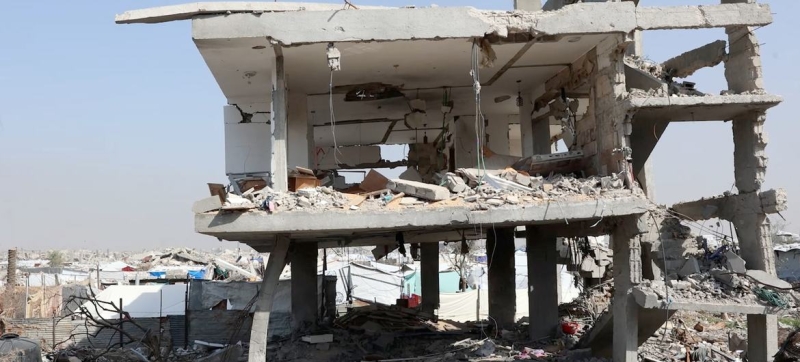

Damaged building in Gaza. Gaza: threat of famine recedes, but humanitarian crisis remains Peace and Security
The threat of full-scale famine in Gaza has so far receded. This was stated by UN Secretary-General Antonio Guterres, commenting on the publication of a new report within the framework of the Integrated Classification of Food Security Phases (ICF).
Speaking to reporters at UN headquarters in New York, he said new data shows many more people in the enclave now have access to food. Guterres said humanitarian agencies are preparing more than 1.5 million hot meals every day. meals, and food parcels continue to be delivered across the sector.
“Clean water is reaching more communities. Some medical facilities have resumed operations,” he noted. During the winter storms UN agencies “immediately provided tents, blankets, clothing and other assistance.”
Continuing threats
The Secretary-General stressed that the progress made was possible thanks to “the hard work of humanitarian organizations and Member States, as well as increasing cooperation with the Center for Civil-Military Coordination.” However, he warned that these gains remain “dangerously fragile.”
An estimated 1.6 million people in Gaza— more than 75 percent of the population —face critical levels of food insecurity. According to the report, no area of the sector is currently classified as being in a state of full-blown famine (IPC phase five), but almost the entire enclave is still in a state of emergency (phase four).
Malnutrition remains a serious problem, especially among children and pregnant and lactating women. By mid-October 2026, almost 101,000 children aged six months to five years are expected to suffer from acute malnutrition, including more than 31,000 severe cases. An estimated 37,000 pregnant and breastfeeding women will also require treatment.
“It breaks my heart to see the scale of ongoing human suffering in Gaza,” Guterres said. According to him, children are forced to sleep in flooded tents, and buildings, “already destroyed by bombing, are collapsing under the weight of rain and wind, claiming the lives of civilians.”
The UN chief noted that in more than half of Gaza, Where Israeli troops remain, “farmland and entire areas remain inaccessible.” Strikes and hostilities continue, resulting in increasing civilian casualties and putting humanitarian teams in grave danger.
UN Support
Guterres recalled that since October the UN had been doing “everything possible to maintain vital channels of assistance”: supporting bakeries, delivering millions of meals, reopening nutrition centers, rebuilding hospitals, vaccinating children, clearing rubble and repairing water pipes. However, he stressed, the need for assistance is growing faster than it is being supplied.
In this regard, the Secretary-General stated: “We need a truly sustainable ceasefire.” He also called for the opening of additional crossing points, the lifting of restrictions on the import of critical goods, the removal of bureaucratic obstacles, the provision of safe routes within Gaza, stable funding and “unimpeded access – including for NGOs.”
International right
Guterres specifically pointed to the “rapidly deteriorating situation in the West Bank,” where Palestinians face “escalating violence from Israeli settlers, land grabs, house demolitions and tightening restrictions on movement.” He said tens of thousands of people had been forced to flee their homes following Israeli operations in the northern West Bank.
He stressed that international law must be respected throughout the Occupied Palestinian Territory, including East Jerusalem. The Secretary-General recalled the provisional measures of the International Court UN and the Advisory Opinion of the Court dated 22 October 2025, according to to which Israel “has an obligation to authorize and facilitate the delivery of humanitarian assistance to cooperate with the United Nations in the implementation of its mandates and to respect the privileges and immunities of the UN and its personnel, including during armed conflict.”
Guterres reiterated his support for the United Nations Relief Agency for Palestine Refugees in the Near East (UNRWA), emphasizing that the agency “plays an indispensable role in providing services to Palestinians in Gaza and other parts of the region.”
60~p>He concluded: “This is a crisis created by human decisions. It can be resolved through the choice of people – if there is political will to act.” The Secretary-General called for full implementation of the ceasefire, an end to the “endless cycle of violence” and a clear path to a two-state process.