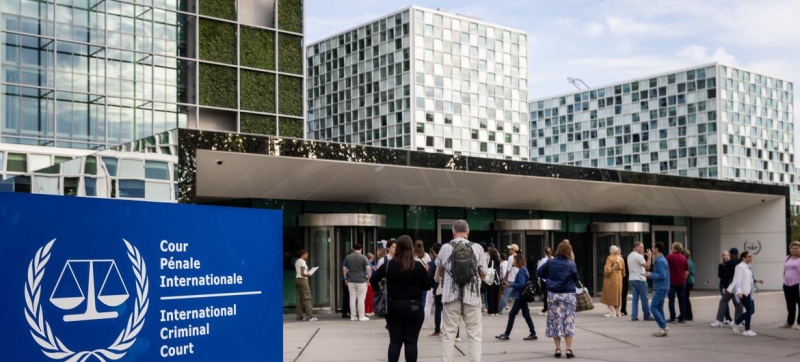

ICC ICC headquarters in The Hague, Netherlands. UN rejects calls to abolish International Criminal Court International Law
The United Nations has reaffirmed the key role of the International Criminal Court (ICC) in the global fight against impunity for serious crimes – amid calls to abolish the body. The court hears cases of genocide, war crimes, crimes against humanity and other international violations.
At a regular press briefing, the spokesman for the UN Secretary-General, Stephane Dujarric, was asked whether the head of the Organization intends to comment on the report that US Secretary of State Marco Rubio is seeking to “dismantle” the ICC.
“Although the ICC is an organization separate from the Secretariat and the UN, for us it remains the most important part of the international justice system,” said Dujarric.
“It has the support of a significant number of Member States and contributes to bringing those responsible for serious crimes to justice,” he added.
The United States is not a party to the Rome Statute, the 1998 treaty that established the ICC, which is headquartered in The Hague, the Netherlands.
Rubio outlined his plans in an article published in The Wall Street Journal, emphasizing sovereignty and independence. “America has never agreed to the existence of a world tribunal capable of overturning the decisions of our own courts and the Constitution,” he wrote.
International Law is Under Attack
In Rubio’s words, the United States is “beginning a diplomatic campaign with a simple message: sovereign states against globalism.” Last year, Washington imposed sanctions on nine ICC officials – including judges, a prosecutor and his deputies – over investigations into alleged war crimes committed by US forces in Afghanistan and Israel in Gaza.
In his article, Rubio emphasized that “independence is our inalienable right,” and the United States does not intend to “change it to the power of the self-proclaimed priesthood of ‘international law.’”
Dujarric was asked whether the Secretary-General agreed with this interpretation of the system on which the UN Charter.
“International law, the Charter of the United Nations, the Universal Declaration of Human Rights were created by sovereign member states,” he noted. secretary, face threats and attacks.”