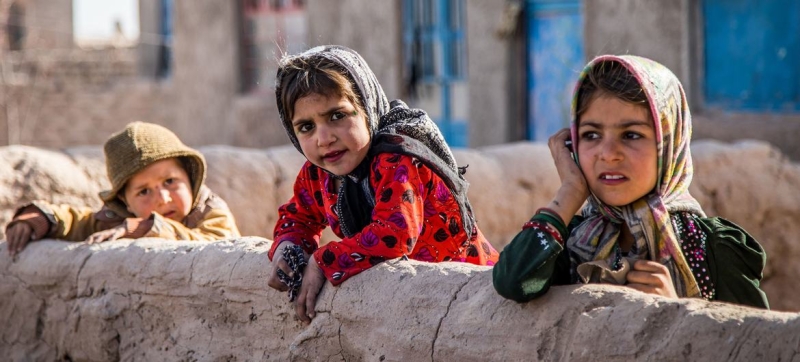

© UNDP/S.O.Sadaat Children in Herat province, Afghanistan. New UN report documents ongoing human rights abuses in Afghanistan Human rights
Afghanistan continues to record serious human rights violations, including restrictions on women and girls, cases of corporal punishment, pressure on the media and arbitrary detention. This is according to a new report from the United Nations Assistance Mission in Afghanistan (UNAMA), covering the period from January to March 2026.
The organization noted that women continue to face systematic restrictions on access to education, employment and justice. And women are almost four times less likely to turn to formal justice mechanisms than men.
The ban on education for girls above the sixth grade has been in effect for the fifth year in a row. UNESCO estimates that these measures affect about 2.2 million Afghan girls.
Restrictions on freedom of movement
The report also highlights continued restrictions on women’s freedom of movement. According to UNAMA, women without veils were removed from public transport and temporarily detained until relatives arrived. The mission also recorded cases in which medical institutions were ordered not to provide care to women without the accompaniment of a mahram, a male guardian. In addition, in a number of provinces, female health workers were ordered to travel to work only if accompanied by a male guardian, and store owners were ordered not to sell goods to women unaccompanied by a mahram and without a “proper” hijab.
Pressure on Media
UNAMA also reports continued pressure on the media and restrictions on freedom of expression in Afghanistan. In January, the de facto Ministry of Information and Culture announced it was revoking the licenses of most media organizations, citing “unprofessional activities.” The work of certain media outlets was also suspended. Thus, the radio station Khushal Private Radio temporarily stopped broadcasting after female students took part in a live broadcast with a male presenter. The report also notes that the media lack a clear mechanism for appealing decisions to suspend their activities.From January to March 2026, UNAMA documented at least 336 cases of arbitrary arrests and detentions, as well as 59 cases of ill-treatment by inspectors of the de facto Ministry for the Promotion of Virtue and the Prevention of Vice. According to the mission, the arrests were primarily related to “inappropriate” haircuts and trimmed beards on men, listening to music, and alleged violations of the rules of wearing the hijab by women.
Inspectors also monitored compliance with religious and cultural restrictions. For example, in On Valentine’s Day, people were arrested in several provinces accused of selling or buying holiday gifts and flowers.
The report also highlights restrictions on Shiite communities. In a number of provinces, representatives of the Shia community were ordered to celebrate Eid al-Fitr only on the date set by the de facto authorities. In one case, a group of Shia clerics were detained for refusing to comply with this requirement.
The justice system and new restrictions
The report notes that in January the Supreme Court sent to the courts a new decree on the Criminal Rules of the Courts, which introduces additional restrictions and expands the list of acts subject to punishment.
According to the document, the death penalty can be applied for a number of crimes, including “spreading corruption,” “heresy,” “blasphemy,” and same-sex relations. The decree also criminalizes criticism of the authorities, their policies and interpretation of Sharia law. Punishments include prison terms and public flogging.
UNAMA also drew attention to the provisions of the decree concerning women. Thus, the document provides for punishment for women who leave their husband’s house without his permission, as well as for relatives who prevent their return.
The UN was particularly concerned about provisions providing for a different approach to punishment depending on a person’s social status. The report notes that members of the “upper classes” may receive warnings, while members of the “middle and lower classes” may receive prison sentences and corporal punishment.