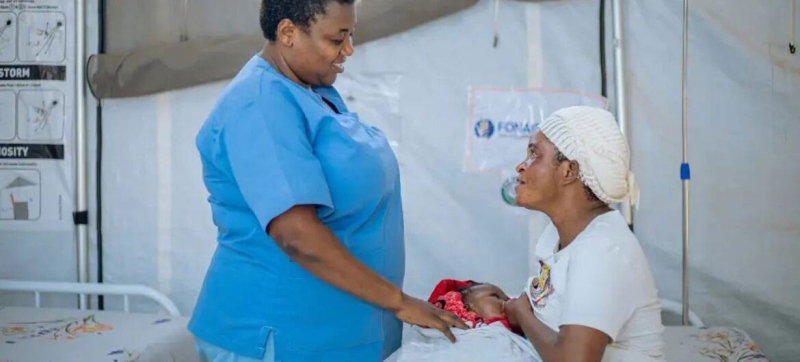

© UNFPA-Burundi/A.-J. Rumbete Midwives are able to provide virtually the full range of essential sexual and reproductive health services. Maternal and child health: midwives helping refugee women in Burundi Healthcare
“When I found out I was pregnant, I was very scared because I knew the birth would be dangerous for me,” says Maombi Kijijwa, 36.
A year earlier, Maombi, along with her husband and thirteen children, were forced to flee their home in the eastern Democratic Republic of the Congo after an overnight attack by armed militias in which their relatives and friends were killed. After three grueling days on the road, the family crossed the border into Burundi and found a roof over their heads in a refugee camp.
Doctors warned the couple that another pregnancy would be dangerous for her health—frequent childbirth seriously undermined Maombi’s health. “My body was exhausted, and I knew that if I continued to give birth at this rate, I could die. I prayed that there would be a way to not have any more children,” Kijijwa recalled in an interview with the United Nations Population Fund (UNFPA). essential sexual and reproductive health services. However, in many countries there is an acute There is a shortage of specialists in this field, and it is estimated that there is a shortage of at least one million midwives. More than half of this shortfall occurs in Africa, which has some of the highest maternal mortality rates in the world.
© UNFPA/A.-J. Rumbete
Despite these regional challenges, Burundi’s maternal mortality rate has declined over the past 30 years and remains relatively low for the region, but more efforts are needed to train midwives and raise awareness of their role among the population.
Maombi sought urgent medical attention at a UNFPA-supported clinic in a refugee camp only late in her pregnancy. Midwife Aline Niyonkuru explained: “Some women present during labor and with complications because they do not yet understand the importance of regular prenatal examinations. However, we expect the situation to improve through community outreach and awareness raising.”
Ensuring continuity of care
Just a few weeks later, Maombi went into labor and midwives trained in emergency obstetric and neonatal care, were ready to help her. “Our midwives work around the clock to provide assistance to pregnant women living in this camp,” Niyonkuru said. “We also inform mothers about family planning options after childbirth, since many women here have insufficiently spaced pregnancies,” she added.
© UNFPA/A.-J. Rumbete
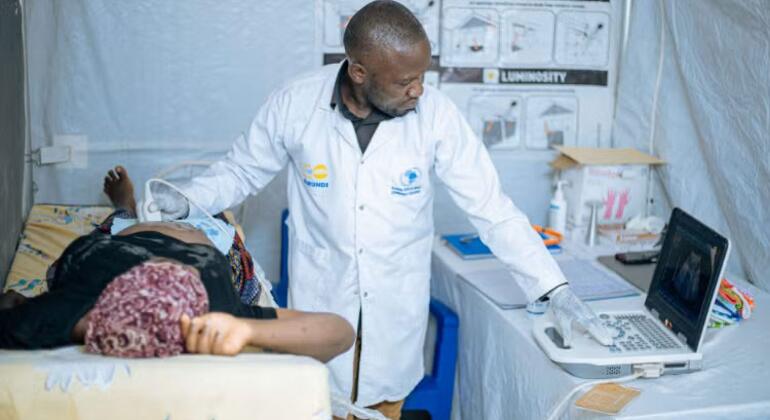
On average, the clinic sees at least 15 births per week. Some women are admitted with serious complications requiring urgent medical attention. However, thanks to medicines, equipment and training provided by UNFPA with financial support from the Government of the Democratic Republic of the Congo, midwives are able to cope with such complications.
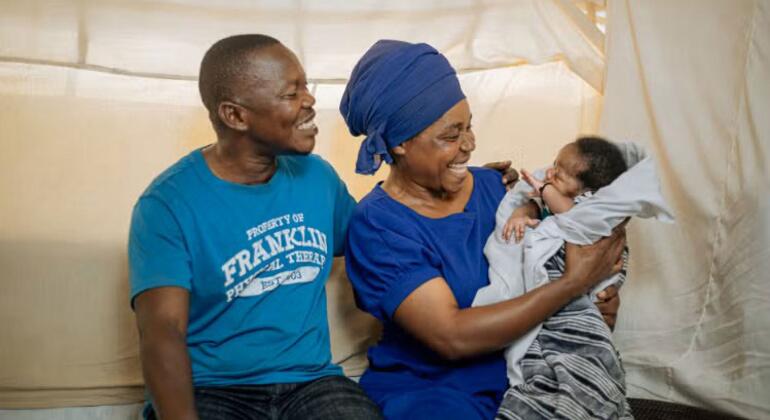
“It was a very difficult birth, and I kept praying for my life and the life of my child,” Maombi said. “The midwife encouraged me and asked me to push gently, and eventually my baby was born. I’m just happy we’re both alive.”
Her newborn son, the 100th baby born at the camp clinic, is clear evidence of the important role midwives play in providing reproductive health services to displaced women living in difficult conditions.
60~strong>Family planning and health women
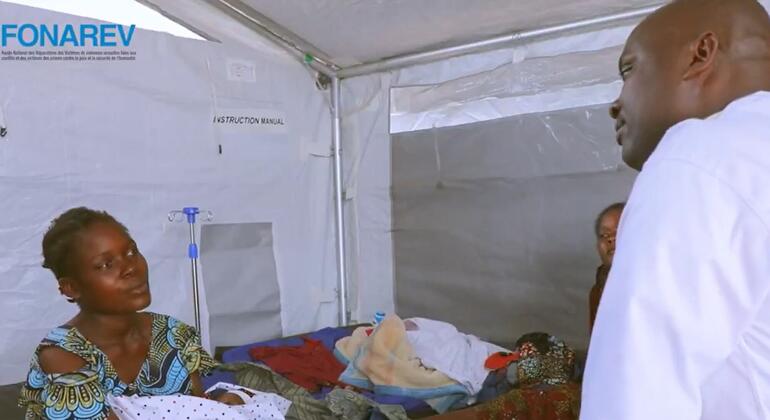
After consulting with the clinic’s midwives, Maombi decided to start using family planning methods to maintain her health and continue to care for her children.
Her husband, Mapenzi Salongo, noted that cultural and religious beliefs prevented him from understanding the importance of spacing children, a misconception that has cost many women their lives.
© UNFPA
“Before, we didn’t believe in family planning. I even lost my sister due to severe bleeding during childbirth. The doctor warned her that another pregnancy would be dangerous, but we decided not to listen to this advice,” he said. However, after seeing the danger his wife was in and the help she received, he changed his mind. “Now I’m trying to tell other men and religious leaders how important it is to protect women’s health,” he added.
The role of health workers
The ongoing conflict in the eastern Democratic Republic of the Congo has forced tens of thousands of people to seek refuge in neighboring Burundi, which So faces the impact of climate crises, food insecurity and an influx of refugees from other countries.
Today, UNFPA and partners are helping more than 100,000 refugees living in Burundi. Health workers help ensure safe births, provide counseling, obstetric ultrasounds, and other critical reproductive health services for women and girls.
Today, May 5, marks the International Day of the Midwife. This is an opportunity to remember their key role in protecting reproductive health and saving lives. Not only do midwives help ensure safe births, but they also reduce the number of unintended pregnancies, prevent mother-to-child transmission of HIV, and reduce unnecessary caesarean sections, helping to improve the health of women and communities.