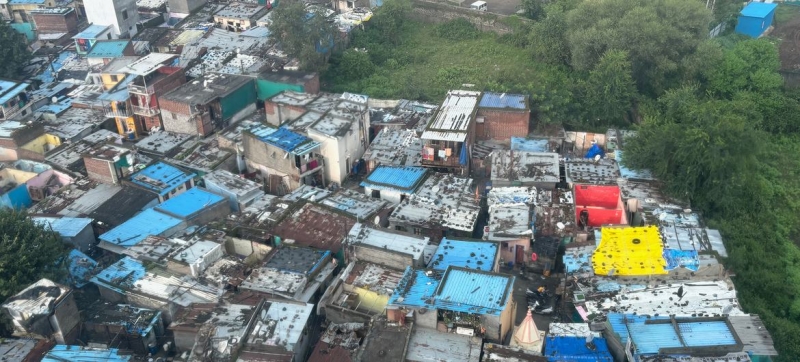

Developing countries are experiencing falling aid levels, rising costs of environmental degradation and climate impacts, and record debt levels. UN warns: World fragmentation is reversing decades of development progress Sustainable Development Goals
Global trends in financing for development are moving in the wrong direction, and in many areas progress has not only stalled, but has begun to reverse. This is stated in the UN Report on Financing for Sustainable Development, which contains an assessment of the implementation of the Seville Agreement, an action plan adopted in 2025 at the Fourth International Conference on Financing for Development.
According to the UN, weakening international cooperation, rising trade barriers, rising geopolitical tensions, recurring climate shocks and an “attack on multilateralism” are creating an environment in which developing countries face unprecedented financial pressure. She called implementation of the Seville Agreement “a key tool for staying on track to achieve the Sustainable Development Goals.”
The challenge of financing
The report says a growing number of developing countries are facing enormous challenges in financing the Sustainable Development Goals amid an overall decline in available resources. They are experiencing aid cuts, rising costs of environmental degradation, and record debt levels. In 2024, debt service reached a two-decade high, official aid to developing countries fell by six percent, and foreign direct investment fell for the second year in a row.
Even before the recent economic turmoil caused by the closure of the Strait of Hormuz, trade and political disagreements were already leading to sharp increases in tariffs and additional costs for developing countries. In 2025, average export tariffs for least developed countries rose from nine percent to 28 percent, and for developing countries excluding China from two percent to 19 percent.
Encouraging data
Despite the unfavorable context, the report also contains encouraging data. Investment in renewable energy reached a record $2.2 trillion in 2024, double that of fossil fuels, and trade among countries in the global South has more than quadrupled over the past two decades. However, global fragmentation and deepening political divisions make it difficult to implement the reforms called for in the Seville Agreement, including the transformation of the international financial architecture. practical and achievable reforms. Countries are encouraged not to abandon multilateralism, but to link domestic investment in human capital and sustainable infrastructure with regional and global support. More than 130 voluntary initiatives launched within the framework of the Seville Platform for Action can become the locomotive of movement forward.
United Nations Under-Secretary-General for Economic and Social Affairs Li Junhua noted that the success of global development directly depends on the ability of states to act together. As 2030 approaches, he said, the international community must “use the Seville Agreement as momentum and ensure a sustainable future for the world.”