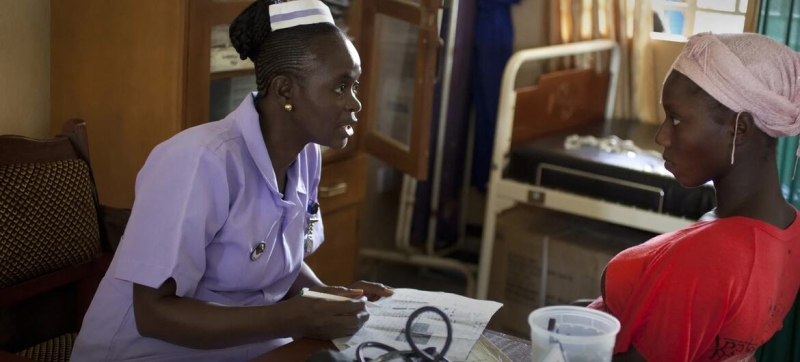

Women are more likely to experience their complaints and symptoms being ignored. Six facts about women’s health that are not commonly talked about Healthcare
Women’s healthhealth continues to receive less attention than men’s health, women are more likely to be misdiagnosed and less likely to prescribe necessary treatment. Why does this happen?
Women today are living longer than at any time in history, but not necessarily better. And if anyone argues that gender equality has already been achieved or wonders if there is too much of it, just look at healthcare – a basic human right that is still not available to everyone.
Women around the world experience their complaints being ignored, symptoms misinterpreted and illnesses being diagnosed too late. Weaknesses persist in the healthcare system, affecting women’s health, safety and quality of life. This is largely due to the fact that the medical system does not take into account the characteristics of the female body.
1. The approach to gynecological examinations has changed little in 150 years. For generations, women have been taught that discomfort is normal and part of their experience.
Now the situation is gradually changing: startups founded by women are rethinking the practice of gynecological examinations, paying more attention to comfort and safety. However, change is slow, and new tools are still rarely used in public health systems.
2. Women live longer, but not necessarily healthier
Women live longer than men: on average 73.8 years versus 68.4. However, if we compare the time in the life of women and men during which various diseases occur, then women have 25 percent more of it.
That is, a longer life does not mean a better quality one. On the contrary, for many women it simply means that they live longer in conditions where they are ignored, disbelieved and their problems remain unaddressed, including in the health care system.
3. When an issue affects women, it often goes unaddressed. If men – her study immediately receives funding
Premenstrual syndrome (PMS) affects most women and girls. For many, this means pain, fatigue and emotional stress that every month for several days can knock them out of their usual rhythm of life. Erectile dysfunction, on the other hand, affects far fewer men, but it is a condition that receives much more attention in research.
For decades, this imbalance has influenced the way the pain women experience is perceived: it is often underestimated, misinterpreted and neglected. However, the situation is beginning to change.
In 2023, Spain became the first country in Europe to introduce paid menstrual leave, joining Japan, Indonesia, South Korea, Taiwan and Zambia. The new law recognizes that menstrual pain can be serious and requires medical support and recovery time.
However, just because a law has been passed does not mean it works in practice. Since its introduction, few have used it, partly because of the ongoing stigma that prevents women from taking the leave they are entitled to.
That is why it is now very important not only to pass laws, but also to speak openly about the problem: to raise awareness among health professionals and to create an approach in which women’s health needs are perceived as natural and deserved attention.
4. Sometimes women have to wait for diagnosis almost ten years
Endometriosis affects every tenth woman and girl in the world— that’s about 190 million people. Despite this, on average it takes from 4 to 12 years to make a diagnosis and begin treatment. All this time, women live with chronic pain and fatigue, while they are often told that there is nothing wrong with them and that such pain is normal.
Diseases such as endometriosis are not at all uncommon. The problem is that women’s condition is still often underestimated, ignored or misdiagnosed. As a result, the diagnosis is often made too late.
5. Until the 1990s, women were hardly included in medical research
Before 1993, women virtually did not participate in clinical trials at all. This means that for decades, treatments and drugs were developed with only the male body in mind and were not fully tested on women: dosages were calculated based on male physiology, symptoms were described based on male experience, and side effects in women often went undetected.
The consequences of this approach are still being felt today. Thus, women are more likely to experience adverse drug reactions, their symptoms are more likely to be misinterpreted, and diseases that primarily affect women remain poorly understood.
Today, these gaps still persist and manifest in new forms. In particular, clinical research, algorithms and artificial intelligence tools continue to lack data on women, which significantly impacts how diseases are studied, diagnosed and treated.
Recent research shows that it is important to consider sex and gender when conducting clinical trials to ensure that treatments are safe and effective for everyone.
Another challenge is that women are underrepresented in health care leadership positions. This is important because women physicians and leaders are more likely to emphasize patient-centered approaches, evidence-based medicine, and solutions that improve women’s health outcomes. For example, in the United States, older patients treated by women had much lower mortality and readmission rates.
6. If your symptoms don’t match the classic description, it could cost you your life
Cardiovascular disease is the leading cause of death among women. However, the descriptions of the main symptoms, such as chest pain radiating to the arm, are largely based on how a heart attack manifests itself in men. In women, however, symptoms may be different: fatigue, nausea, shortness of breath, or jaw and back pain. Because such signs are less well recognized, women are less likely to receive timely, life-saving care, such as angioplasty or stents. As a result, the risk of death after a heart attack is higher in women than in men. Moreover, in some cases, women are simply sent home instead of receiving the necessary treatment.