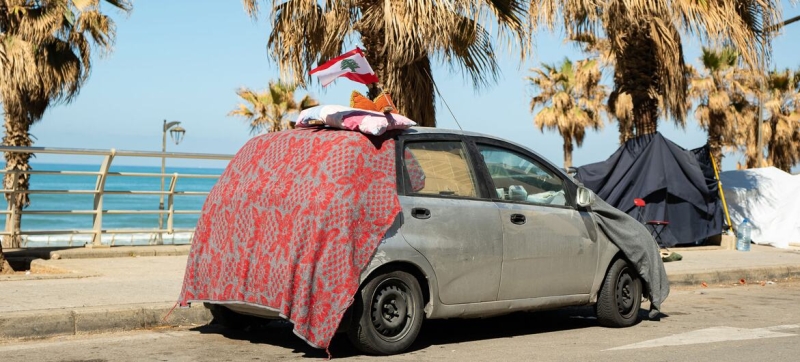

Internally displaced people found refuge on the Beirut waterfront. UN warns of humanitarian and economic consequences of war in the Middle East Peace and Security
Escalation in the Middle East is having an increasing humanitarian and economic impact on countries around the world, the UN warns. On Monday, during morning trading in Asia, the price of Brent crude oil rose to almost $110 a barrel, then slightly decreased.
Rising oil prices linked to reduced traffic through the Strait of Hormuz are driving up the cost of transport, energy and agricultural inputs around the world, especially in countries reliant on energy imports. Shipping disruptions and rising insurance premiums due to military risks are putting additional strain on supply chains, and fertilizer shortages are raising concerns about food production.
Impact on humanitarian aid operations
The crisis also affects humanitarian efforts: rising fuel and transport prices increase the cost of providing assistance. The World Food Program (WFP) said the Middle East crisis has significantly disrupted global food supply chains. Shipments of about 70 thousand metric tons of food (enough to feed 4 million people for a month) are delayed, expensive, or diverted.
Fertilizer shortages could derail future harvests. If the crisis drags on, up to 45 million more people worldwide could face acute hunger, according to WFP forecasts.
According to the United Nations Conference on Trade and Development (UNCTAD), the sharp decline in maritime transport through the Strait of Hormuz is increasing financial pressure on developing economies. Rising uncertainty is causing investors to flee markets, weakening national currencies and raising borrowing costs.
Ongoing attacks
Medicine evacuations from Gaza to Egypt through the Rafah crossing have been immediately suspended, according to the World Health Organization (WHO). Monday after a serious security incident.
Meanwhile, Lebanon’s health system is under enormous pressure. Since the beginning of March, there have been 92 attacks on medical facilities, ambulances and personnel, resulting in 53 deaths and 137 injuries. In some hospitals, the number of emergency calls has tripled, while medical facilities in other areas have been forced to close. Syria. However, access to those in need is severely limited: almost 80 percent of humanitarian convoys to southern Lebanon were unable to travel to their intended destination due to security restrictions.
The crisis for women and girls
The United Nations Population Fund (UNFPA) warns that women and girls bear the brunt.
In Lebanon, more than 1.2 million people have fled their homes. Among the displaced are about 13,500 pregnant women, many of whom are unable to receive basic medical care. More than 620 thousand women and girls face increased risk of violence and exploitation.
60~p>UNFPA expands its operations to mobile clinics, safe spaces and distribution sets of essential items for women and babies. At the same time, the UN agency warns that providing critical services will soon be impossible due to a lack of funding. close proximity to the Bushehr Nuclear Power Plant in Iran, including one strike just 75 meters from the site perimeter. The plant itself was not damaged, according to an analysis of images from April 5.IAEA Director General Rafael Mariano Grossi again warns that continued military activity near an active nuclear power plant with large amounts of nuclear fuel could lead to a serious radiological accident with harmful consequences for people and the environment both in Iran and beyond. The nuclear facility and its surrounding areas should never be attacked, Grossi emphasized.