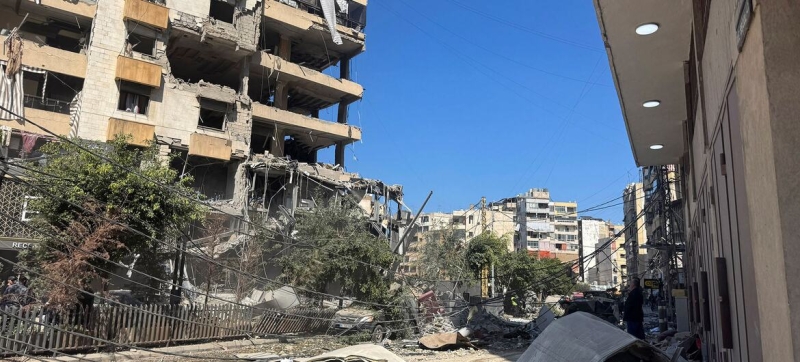

Consequences of airstrikes in the southern suburbs of Beirut. Middle East: More shocks, rising displacement and threats to health systems Peace and Security
The fighting in the Middle East has continued for the sixth day. According to media reports, Iran, Israel, Lebanon and a number of Gulf countries continue to suffer from drone strikes, missiles and aircraft. It is also reported that NATO forces intercepted a missile fired at Turkey from Iran, but Tehran denies these claims.
According to available information, the Permanent Representative of Iran to the UN Office in Geneva, Ali Bahreini, met with the UN High Commissioner for Human Rights, Volker Türk. Earlier, UN Secretary-General Antonio Guterres discussed the situation with the Permanent Representative of Iran to the UN in New York, Amir Saeed Iravani.
A spokesman for the UN chief told reporters on Wednesday that the Secretary-General expressed hope for “an early end to the conflict and a return to dialogue in the interests of regional stability.” villages along the Blue Line, the demarcation line between the Israeli and Lebanese armed forces.
According to the mission, the evacuees included children, the elderly and people with disabilities. Peacekeepers are working to protect civilians despite the challenging security environment.
A new wave of displacement in Lebanon has forced more than 58,000 people to flee their homes in just two days. Many are taking refuge in overcrowded public schools. This was reported from the United Nations Population Fund (UNFPA). The agency warns that disruptions to sexual and reproductive health services increase risks for women and girls. UNFPA is deploying mobile medical teams, providing psychological support and distributing relief kits to shelters.
The situation of refugees across the region
The conflict is exacerbating the humanitarian situation throughout the region. According to the United Nations High Commissioner for Refugees (UNHCR), the situation for vulnerable groups has worsened markedly since the start of Israeli and US airstrikes on Iran and retaliatory attacks by Tehran. In total, more than 330 thousand people have been forced to flee their homes in recent days.
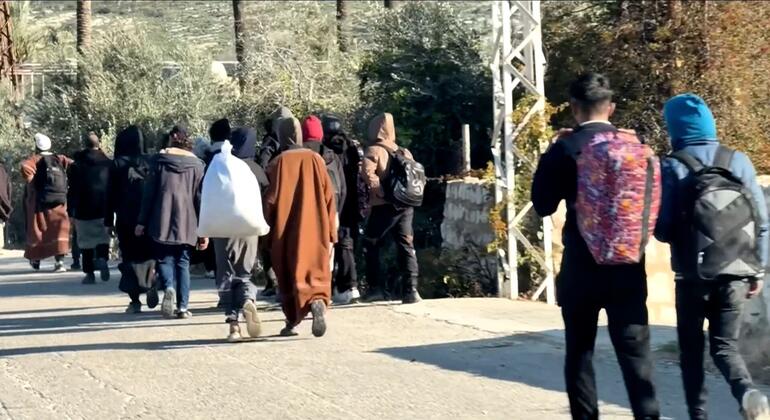
Almost 25 million internally displaced people already live in the affected countries. Many of them face serious risks and growing humanitarian needs, UNHCR said.
Economic implications for Afghanistan
The escalation is also affecting Afghanistan’s economy and transport links, the UN Office for the Coordination of Humanitarian Affairs (OCHA) said. Although Kabul International Airport remains operational, airspace restrictions in the region have already resulted in flight cancellations or delays.
Iran, one of Afghanistan’s main trading partners, has reportedly suspended exports of goods to the country. This has raised concerns about rising prices and dwindling supplies of fuel and staple foods. However, border crossings remain open for the movement of people.
WHO warns of attacks on health facilities
World Health Organization (WHO) Regional Director for the Eastern Mediterranean Hanan Balkhi warned that the escalation has serious consequences for civilians and health systems.
According to reports, more than a thousand people and about 7 thousand were injured.
The increase in attacks on medical facilities is of particular concern. Over the past week, WHO has confirmed 13 attacks on medical facilities in Iran and one in Lebanon. In Lebanon, evacuation orders led to the closure of 43 primary health care centers and two hospitals. Emergency workers have been killed and injured in the violence.
Balkhi also noted that humanitarian supply chains in the region are at risk of collapse. The WHO logistics center in Dubai has temporarily suspended operations due to security concerns, airspace closures and restrictions on access to the Strait of Hormuz.
This is causing $18 million worth of medical supplies to be delayed and $8 million worth of supplies unable to reach the logistics center. WHO is having difficulty responding to more than 50 urgent requests from 25 countries. Among the detained cargo are medicines for Gaza and laboratory materials for the fight against polio.