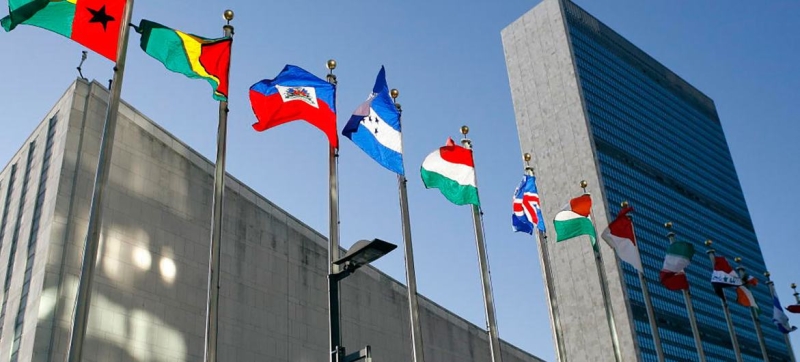

UN headquarters in New York. New report presented at the UN: More than 70 percent of parliamentarians around the world face violence Human Rights
More than 70 percent of lawmakers worldwide said they had been subjected to violence by members of the public, including online. This is stated in a new report of the Inter-Parliamentary Union (IPU).
Speaking at UN headquarters in New York on February 11, IPU Secretary-General Martin Chungong warned of growing hostility towards elected officials. The report, titled “When Society Turns Hostile: Political Violence Against Parliamentarians,” looks at the growing incidence of intimidation and harassment of MPs by citizens.
“Violence is largely concentrated online, with 65 to 70 percent of MPs in five countries reporting incidents of online abuse,” said Chungong.
The report is based on interviews with hundreds of parliamentarians, as well as in-depth research in Argentina, Benin, Italy, Malaysia and the Netherlands. According to the findings, the most common forms of pressure include insults and derogatory remarks, dissemination of false or misleading information, and threats. The majority of respondents believe that the situation is getting worse. In Argentina and the Netherlands, up to 80 percent of lawmakers reported an increase in violence over the past five years.
“Online violence is often triggered by elections, high-profile parliamentary debates, or polarizing political and cultural issues,” he noted. Chungong.
Online violence is often triggered by elections, high-profile parliamentary debates, or polarizing political and cultural issues
The report also points out the gender aspect of the problem. Women parliamentarians are more likely to be targeted: 76 percent of women lawmakers in countries surveyed, but only 68 percent of men, reported experiencing violence.
Referring to the situation in the United States, Chungong called it “very acute” and noted an increase in attacks on politicians and even their family members. He mentioned the arson targeting Pennsylvania Gov. Josh Shapiro, the attack on the husband of former House Speaker Nancy Pelosi, and the recent physical attack on Congresswoman Ilhan Omar during a meeting with constituents.
Chungong warned that this trend poses a serious threat to democratic institutions. “This phenomenon can have a negative impact on democracy,” he stressed, adding that increased public hostility has “serious consequences not only for the safety and well-being of legislators themselves, but also for the functioning of parliaments and the quality of democratic debate.” Many MPs interviewed reported that they had changed their behavior. “They are resorting to self-censorship on the Internet, becoming more cautious in their public statements,” he said.
IPU, headquartered in Geneva, is holding its annual parliamentary hearing this week at UN headquarters in New York in conjunction with the Office of the President of the General Assembly. Approximately 250 people are expected to attend, including approximately 150 parliamentarians from around the world.