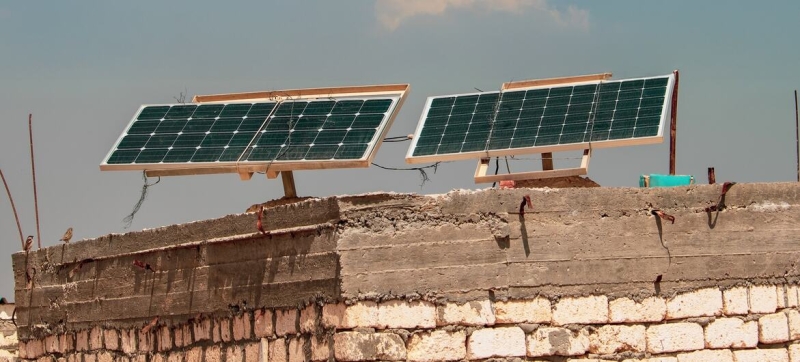

Rooftop solar panels in India. UN chief calls for accelerating clean energy revolution Sustainable Development Goals
More than 75 percent of global greenhouse gas emissions come from burning fossil fuels for energy. The lack of reliable and environmentally friendly energy supplies hinders development in education, health and the economy.
Thus, many of the developing regions still rely heavily on polluting fossil fuels for daily life, exacerbating the poverty levels of their populations. An estimated 1.5 billion people in rural areas still use unsafe, unhealthy and inefficient cooking systems, such as burning wood or manure. It is estimated to cause 3.2 million premature deaths each year.
On International Clean Energy Day, celebrated on January 26, UN Secretary-General Antonio Guterres called on countries to accelerate global energy transition.
Accelerate progress
Installed renewable energy capacity per capita continues to grow annually and in developing countries has reached a new high of 341 watts per person, up from 155 watts in 2015.
“The world is changing, but we must accelerate,” the UN chief said in his message, emphasizing that the task of the international community is to make possible temperature rises of more than 1.5 degrees Celsius “as small, short and safe as possible” through a fair and orderly phase-out of fossil fuels fuel.
According to the Secretary General, renewable energy sources are already becoming a key driver of transformation. In many regions, they are the cheapest source of new energy, and last year, for the first time in the world, wind, solar and other “green” energy provided more electricity than coal.
Guterres noted that clean energy not only helps fight climate change, but also contributes to development: providing access to electricity for those still living without it, providing safer cooking methods, improving health and education outcomes, creating jobs and reducing countries’ exposure to geopolitical shocks and price instability in fuel markets. According to the UN, every dollar invested in renewable energy creates three times more jobs than investment in fossil fuels.
Just Transition
However, Guterres stressed, the pace of the transition must be accelerated. Energy networks have not kept pace with the growth of renewable energy capacity, and high financial costs continue to leave many developing countries behind.
The Secretary-General called for tripling the world’s renewable energy capacity by 2030, removing administrative and financial barriers and ensuring access to clean energy for people and industry. He stressed the importance of modernizing energy grids, developing energy storage systems and diversifying supply chains, including in the field of critical minerals.
Particular attention, he said, should be paid to a fair transition – protecting workers and local communities, supporting education and creating new economic opportunities.
For the financial sector, the Secretary General recommended reducing the cost of capital for developing countries, and multilateral development banks – to be more proactive in mitigating risks and attracting private investment.
“Clean energy – is the future that is here, – said Guterres. “Let’s seize the moment and bring the renewable energy revolution to every corner of the world.”