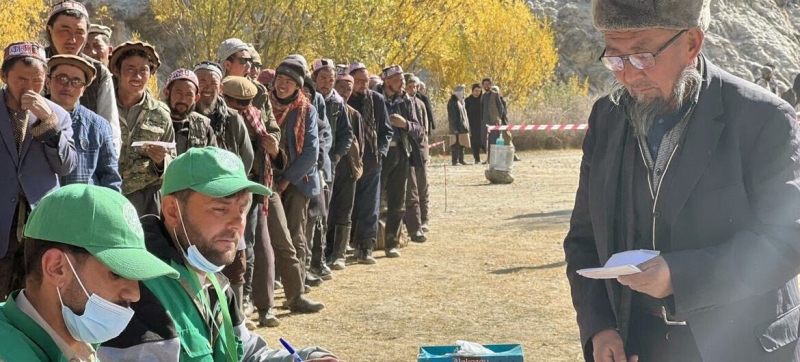

Haji Rasul receives food assistance from WFP in the Wakhan district of Badakhshan province. From the Pamirs to Wakhan: hunger, hope and the struggle for survival in the mountains of Afghanistan Ziauddin Safi Humanitarian Aid
As winter approaches, famine gradually engulfs the remote mountainous regions of Afghanistan. Assistance from the UN World Food Program (WFP) remains the only support for local residents.
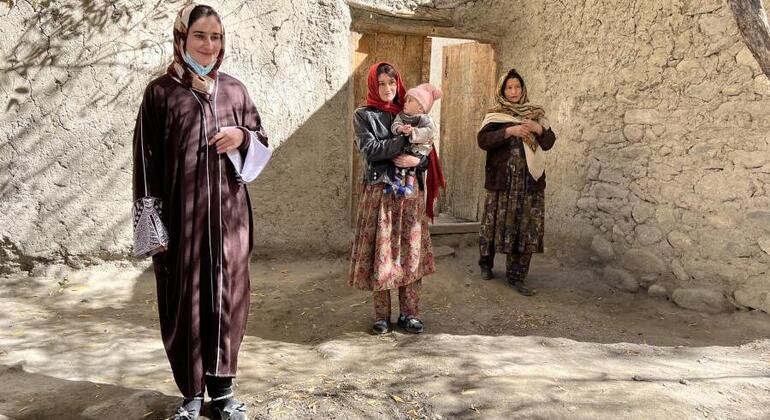
In the remote valleys of the Pamirs and Wakhan, winter is not just a season. For many, this is a time of struggle for survival. For poor families living in the highlands, isolation, hunger and cold define life for nine long months of the year. When snow falls, the roads disappear – and along with them, the routes through which vital aid reaches people. Haji Rasul, an elder of one of the villages of the Great Pamir, has lived in these harsh conditions since birth. “We have three months of summer and nine months of snow,” he says in a weary voice after a seven-day journey to the nearest WFP aid distribution point. “No roads, no trees, no crops – just a few livestock and a fragile hope for the best.” Generation after generation, people lived here without a normal road, engaged in cattle breeding and trade. “We exchange one sheep for two bags of wheat flour,” he explains. “For large families, this is nothing.” Residents of his community walk many kilometers to receive a three-month supply of food from the WFP. Flour, pulses, cooking oil, salt and specialized nutritional foods for women and children help prevent malnutrition. People are stretching supplies as far as possible. Last winter was catastrophic: forty people – young mothers and children – died because they were sick and weak, and food and medicine did not reach them in time. Malnutrition is widespread and families often survive on borrowed flour. “Some people eat just once a day,” adds Rasul. Hundreds of kilometers away, in Wakhan, 22-year-old Gulnuma is waging her own struggle for survival. “I was included in the WFP nutrition program and received nutritious food every month,” she says. Gulnuma and her family often live almost exclusively on milk tea, which they drink three times a day. “My husband is unemployed. There’s no work, no food, and it’s very cold in winter,” she says. “We survive on tea and milk.” The girl would like to become a midwife, but this dream does not seem realistic in a place where people are busy every day with basic survival. “I’m still hopeful,” she says. “I want my daughter to go to school and have nutritious food.” WFP has increased its assistance to Afghans during the winter months every year, but this winter is special: for the first time in decades, a funding crisis has prevented the organization from launching a large-scale humanitarian operation at a time when needs are at their peak. Famine is escalating across the country. Afghanistan has the fourth highest rate of acute child malnutrition in the world; One in three Afghans – 17.4 million people – are in urgent need of food assistance. Malnutrition among women and children is expected to rise sharply in winter, to the highest level in recent years.