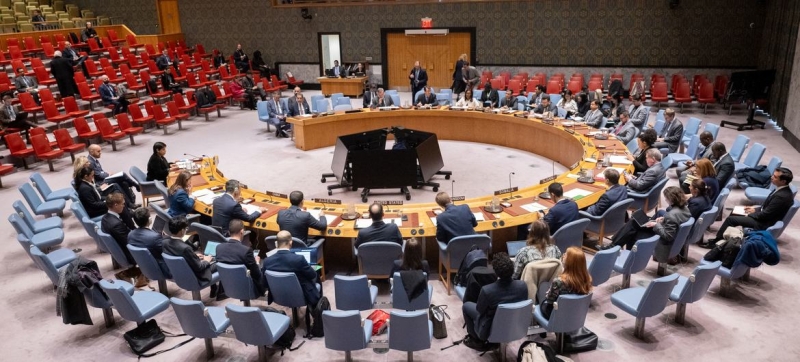

Security Council meeting on the current situation in Libya. Libya: political impasse and attempts to establish dialogue Peace and Security
The UN Secretary-General’s Special Representative for Libya, Hannah Tetteh, addressed the Security Council on Friday with a detailed analysis of the political, economic and humanitarian situation in the country. According to her, four months after the presentation of a road map aimed at overcoming the political crisis, progress remains extremely limited, and key political institutions continue to block each other’s actions.
Stalled reforms and lack of trust
One of the first steps in the implementation of the roadmap was updating the composition of the High National Election Commission (HNEC) and introducing amendments to the constitutional and legal framework relating to elections. However, despite numerous consultations, these tasks have not been completed, Tetteh stated. The committees of the House of Representatives and the Supreme Council of State of Libya agreed on October 4 on a two-week deadline for reforming the HNEC, but the process has stalled. Even after agreeing on the mechanism for selecting members of the HNEC Council on November 28, the parties were unable to meet their own deadlines. According to Tette, the delays reflect a deep crisis of trust between the two institutions, internal disagreements and an inability to reach a compromise. At the same time, according to her, some members of both structures are sincerely trying to move the process forward.
Demands to hold elections are becoming louder
Amid the political deadlock, public demand for elections is intensifying. After mass demonstrations in five cities in the east of the country, Speaker of the House of Representatives Aguila Saleh Isa called for presidential elections. The VNIK announced its readiness to begin preparations for presidential and parliamentary elections in April 2026. Prime Minister Abdel Hamid Dbeibah also supported the idea of holding elections and announced an upcoming government reshuffle. The UN mission in Libya called on political leaders to agree on a legal framework so that the NEC can begin full preparations for the elections.
Economic fragmentation
Libya continues to suffer from financial fragmentation that is undermining stability and trust in government institutions. In an effort to correct the situation, representatives of the House of Representatives and the High State Council signed an agreement to create a Unified Development Program – a common mechanism for the distribution of funds. If the program is implemented transparently and under proper control, it could be a step towards strengthening financial stability and improving public services, Hanna Tetteh emphasized.
Local elections: a rare example of progress
Despite the general political crisis, municipal elections in Libya, according to Tetteh, are going well. On October 18, voting took place in 16 municipalities with a turnout of 68 percent. On December 13, elections were held in nine more cities.