

The process of preparing drugs according to traditional Chinese medicine recipes. Traditional medicine becomes a global trend? Healthcare
Tea with raspberries and mustard plasters: many of us remember how our grandmothers treated us for coughs, how they brewed herbs and believed in their healing power. The World Health Organization suggests taking a renewed look at knowledge passed on from generation to generation. Moreover, almost 90 percent of WHO Member States (170 out of 194) report that between 40 and 90 percent of their populations use traditional medicine.
Summit in New Delhi
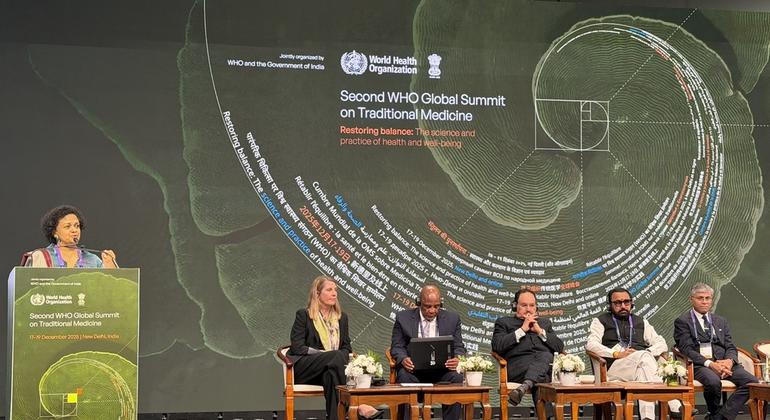
On December 17, the second WHO Global Summit on Traditional Medicine, organized jointly with the Government of India, opened in New Delhi. It is attended by ministers, scientists, indigenous leaders and practitioners from more than 100 countries.
The forum is expected to announce major scientific initiatives and new commitments aimed at accelerating implementation of the WHO Global Strategy for Traditional Medicine 2025–2034, which focuses on strengthening the evidence base, improving regulation, integration into health systems, collaboration and engagement communities.
Traditional medicine
Traditional medicine methods began to be used long before the advent of modern biomedicine and continue to develop today. For many, this is the only way to get help that is locally available, affordable, and familiar. Some people, even having the opportunity to use modern medicine, prefer a more “natural” option for taking care of their health.
WHO strives to combine the wisdom of millennia with the capabilities of modern science and technology
“WHO strives to combine the wisdom of millennia with the power of modern science and technology to achieve universal health coverage,” said WHO Director-General Tedros Adhanom Ghebreyesus. “Responsible, ethical and equitable practices, and the use of innovations from artificial intelligence to genomics, unlock the potential of traditional medicine and provide safer, smarter and more sustainable health solutions for every community and for our planet.” – lack access to essential health services, and a quarter – more than 2 billion people – face financial barriers to health care.
Integrating traditional medicine into health systems is critical to increasing access and choice of affordable, people-centred services and promoting universal health coverage, where everyone can get the care they need without financial hardship.
Evidence suggests that this approach saves money while also focusing on prevention and health promotion, and can lead to positive outcomes, including more rational use of antibiotics.
Effective integration requires a strong scientific base, global quality and safety standards, and strong regulatory mechanisms. “The same scientific rigor must be applied when assessing and validating biomedicine and traditional medicine, while respecting biodiversity, cultural sensitivity and ethical principles,” said WHO Chief Scientist Sylvie Briand. “Greater collaboration and advanced technologies—such as artificial intelligence, genomics, systems biology, neuroscience, and advanced data analytics—have the potential to transform the way traditional medicine is studied and applied.”Traditional medicine underpins rapidly growing global industries, including medicinal plants. All traditional medicines and more than half of biomedical drugs come from natural resources, which remain a critical source for the development of new medicines.
Indigenous peoples maintain about 40 percent of the world’s biodiversity, but make up only 6 percent of the world’s population. Promoting traditional medicine requires consideration of indigenous peoples’ rights, fair trade principles and benefit sharing.
Global Library
Despite the widespread use of traditional medicine and its important role in conserving natural resources for the health and well-being of the planet’s inhabitants, less than one percent of global health research funding goes to this industry. To fill gaps in knowledge and research, WHO is launching the Global Library of Traditional Medicine, the first of its kind. It includes more than 1.6 million publications covering research, policy, regulation and subject collections on various applications of traditional healing methods.
Promoting traditional medicine is an imperative based on evidence, ethics and concern for the environment Wednesday
The library was created in response to calls from heads of state at the G20 and BRICS meetings in 2023. It also provides equitable online access to peer-reviewed materials for institutions in low-income countries through the Research4Life initiative, helps countries document traditional medicine practices with intellectual property protection, and builds scientific capacity to stimulate innovation.
“Promoting traditional medicine is an imperative based on evidence, ethics and concern for the environment,” said the Acting Director of the WHO Global Center for Traditional Medicine Shyama Kuruvilla. “The Global Summit creates the conditions and partnerships needed to enable traditional medicine to make a meaningful contribution to the prosperity of people and the planet.”