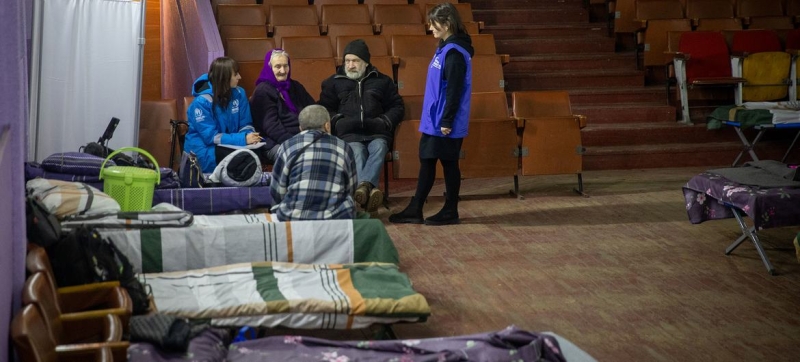

UNHCR staff speak with displaced people from the Donetsk region at a transit center. INTERVIEW | The fourth winter of the war: Ukraine is preparing for another test Peace and Security
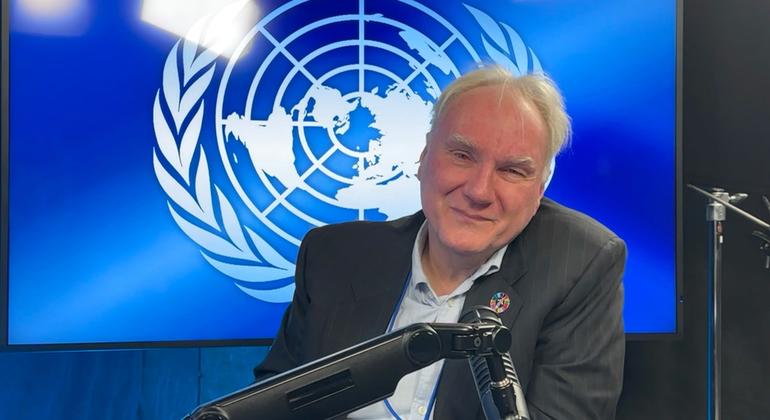
Ukraine has entered the fourth winter of full-scale war – and this winter, warns UN Humanitarian Coordinator in the country Matthias Schmale, may be more difficult than previous ones. In an interview with UN News Service, he spoke about growing fatigue, crumbling energy infrastructure, the plight of the world’s most vulnerable, and why, despite the feeling of repetition, the UN’s announcements about the strikes on Ukraine still matter.
According to Matthias Schmale, Ukrainians are trying to live a normal life under daily shelling: just recently in the Dnieper, he recalls, four civilians were killed and dozens were injured. At the same time, the energy system – generators and distribution networks – is under attack. With the onset of cold weather, the main concern of humanitarian workers is the people who may find themselves in high-rise buildings in the winter without utilities. Shmale.
Fatigue and psychological exhaustion
This winter differs from the previous one not only in the scale of destruction, but also in the accumulated effect of four years of war. The UN Coordinator emphasizes that there is visible damage – destroyed houses, schools, hospitals, dead and wounded. But there is also an invisible layer – psychological exhaustion.
“I really feel when traveling around the country that people are getting tired, becoming more and more exhausted. They are increasingly questioning whether they have a positive future at all,” he notes.
Last year, Shmale adds, the damaged energy system was able to be restored quite quickly, and the winter turned out to be milder than expected. Now there is much more destruction, and winter forecasts are more severe.
Humanitarian agencies are particularly focused on three categories of vulnerable people. The first is low-income city residents living in old or dilapidated high-rise buildings. The second is people who remained living near the front line: according to UN estimates, at least half a million people remain in the zone from zero to 20 kilometers from the contact line, mostly elderly and people with limited mobility. The third category is internally displaced persons who have been living for four years in a protracted crisis, often without permanent income and housing.
Why do people stay
Evacuation from front-line areas continues in waves. Shmale says he recently returned from the Donetsk region, where, according to the local governor, fewer than 200,000 people remain in the government-controlled part of the region – and at least half of them may leave when the harsh winter sets in. But the other half, paradoxically, will remain.
The reasons why people stay vary. For some, this is the deepest attachment to the land and home – where they and their ancestors were born. Others simply did not find acceptable options for temporary residence in relatively safe areas: “Some say: I’m better off in my own house, even if it’s more dangerous, but at least I don’t have to pay rent.” There are those who are stoically convinced that “we’ll survive another year,” and those who remain out of a sense of protest and in memory of the dead: they believe that they cannot leave the land for which such a high price has already been paid.
Help continues to arrive
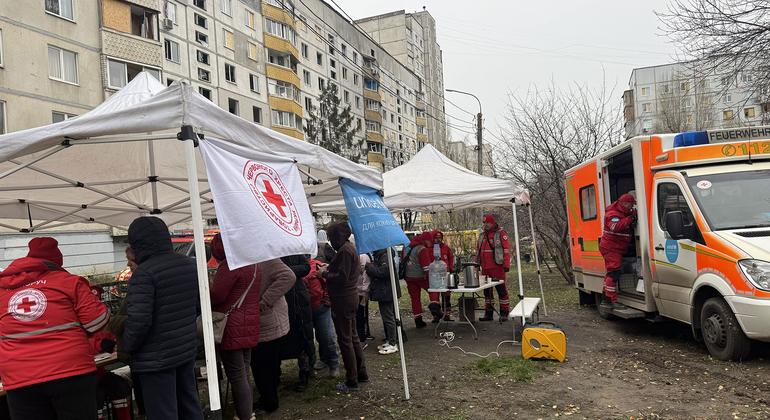
The work of humanitarian workers in winter is complicated by weather conditions and an ever-changing front line. Roads are becoming slippery and dangerous, and the advance of Russian forces is making access to a number of populated areas impossible. The World Food Programme, Schmale notes, has already lost access to at least 50 thousand people who were previously able to help. They are provided with financial assistance to buy fuel and pay for electricity, warm clothes and other things to help them survive the cold season. The plan has requested $278 million and is about 65 percent funded.
“We have been able to do a lot, but we lack funds. Now there are people who are still waiting for support – cash, fuel for stoves,” says the UN coordinator, addressing international donors with words of gratitude for the allocated funds and a request not to leave Ukraine in trouble in the future. limits.
The state continues to fulfill its functions
At the same time, Shmale emphasizes: Ukraine is not a “failed” state, but a fully functioning state, which, even in conditions of war, continues to provide basic services. “I was amazed that, despite the destruction, medical institutions are functioning, which are located quite close to the front line, there are markets, shops, rural doctors,” he says. The UN’s task is to support state and local authorities where their capabilities are lacking.

Courage of Ukrainians
Speaking about personal impressions, the UN Coordinator recalls the stories that particularly struck him during his trips around the country. In Kharkov, he spent half a day underground in a shelter, talking with students, and at that time nearby, rockets hit a kindergarten three times. Later, at the site of the attack, he met a humanitarian worker who took the children to this garden in the morning, then picked them up after the shelling – and returned three hours later to help clear the rubble. In Kherson, where, according to the local governor, in 2025 there was not a single day without shelling, above the ground there are empty streets and destroyed buildings, and below the ground there is a modern maternity ward, built with the support of the European Union: “Above is war, below is a new life being born.” de-occupation, but, remembering his brother who died in 2022, he could not hold back his tears. “Joy and sorrow are nearby,” adds the interlocutor of the UN News Service.
The role of the UN
A separate topic is the role of the UN in monitoring and documenting violations of international law. Shmale recalls that the leadership of the Organization, including the Secretary General, has clearly and repeatedly stated: this war violates the UN Charter and the territorial integrity of Ukraine. The UN, according to him, can be proud of the fact that it “stands on the right side of history”, as well as the fact that it continues to “stay and help” – about three thousand UN employees and more than 400 partner NGOs work in the country, most of which are Ukrainian. humanitarian law and protect civilians.
Shmale is convinced that for Ukrainians these words are far from a formality. “I take it as an important signal that we are being monitored,” he says. “When, after a major attack, I don’t make a statement, they ask me directly: why didn’t you say anything?” For Ukrainians, he emphasizes, it is important that the UN not only brings aid, but also “records what is happening, becomes a witness.”
This role is strengthened by the work of a team of about 70 human rights monitoring officers. Their job is to document possible violations and crimes to ensure future accountability. “We are valued not only for practical assistance – for the support we talked about – but also for the fact that our voice is heard and we help document events. This is important,” says the Coordinator.