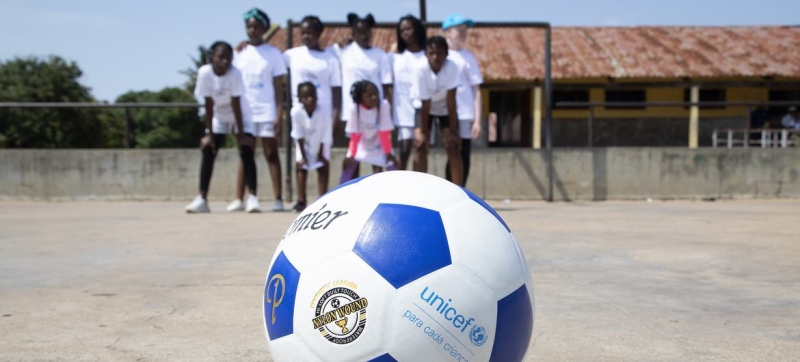

An inclusive sporting event in Mozambique. Ahead of the FIFA World Cup: sport brings people together and breaks down barriers Sustainable Development Goals
The 2026 FIFA World Cup begins in just a couple of months, and the UN reminds us that sport has a transformative impact on society – uniting people from different countries and generations, creating space for dialogue and mutual respect. The tournament final will be held at MetLife Stadium in New Jersey – just a few kilometers from UN headquarters, where athletes and representatives of sports organizations recently discussed football and other sports in global progress.
Billions of people around the world are expected to follow the matches. From June 11 to July 19, 48 national teams will compete in 104 matches in Mexico, Canada and the United States.
Supporting Youth Through Sports
The Play Collective program will be implemented in three host countries to support local sports organizations and create safe spaces for youth.
The project is implemented jointly by the Adidas Foundation, Beyond Sport and the global non-profit initiative Common Goal, which brings together a network of public organizations that help about 3.6 million young people annually.
“Making space for each other”
Common Goal chief executive Mary Connor spoke at an event to mark the International Day of Sport for Development and Peace, celebrated annually on April 6.
She drew a parallel between football, where team support is key to success, and the work of the UN. “We come together despite the differences and cultural barriers that separate us, and create space for each other to find solutions even in the most difficult circumstances,” she said.
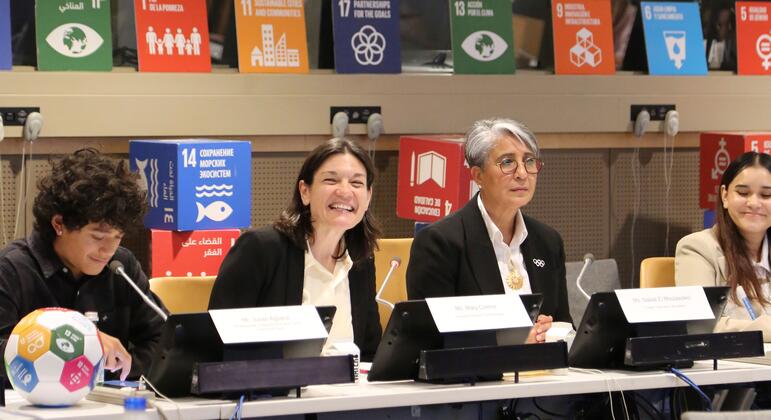
Among the speakers was the legendary athlete Nawal El-Mutawakel, one of the stars of the 1984 Olympic Games in Los Angeles. She then became the first Moroccan, as well as the first African, Arab and Muslim woman, to win Olympic gold in the 400m hurdles.
Her victory was a turning point, inspiring women in Morocco to become more active in a sport that had previously been considered a predominantly male domain.
Overcoming hurdles
Today, El-Mutawakel serves as vice-president of the International Olympic Committee and continues to promote equality and social transformation through sport.
Speaking at the UN, she compared her sporting discipline to the challenges of life: “My distance is 400 meters hurdles. There is a start and a finish, and between them there are ten barriers. I have had barriers in my life that teach discipline, coordination, determination. Sometimes there are setbacks, but I never gave up.”
She also noted that progress is obvious: for the first time in 100 years, the International Olympic Committee is headed by a woman – Kirsty Coventry, the first African representative to do so. The percentage of women in the organization has reached 50 percent at all levels.
Young athletes also joined the discussion and spoke about how sport has changed their lives. Among them is Eileen Lopez, who was able to cope with psychological problems through football and today is a youth leader of the organization Street Child United, helping children living on the streets or in extreme poverty.