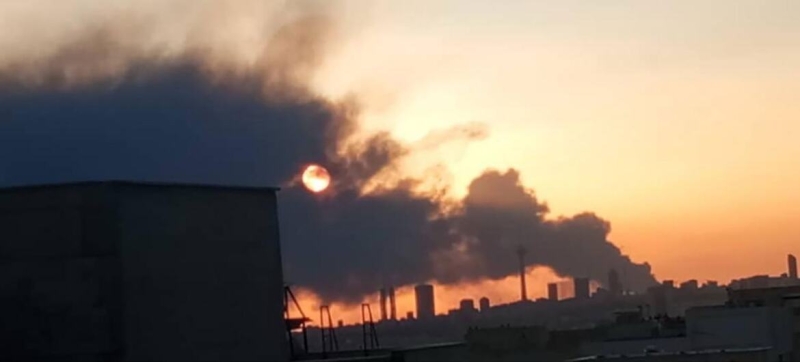

Smoke over Tehran, Iran. UN human rights chief warns of growing repression and restrictions on freedom of speech in the Middle East Human Rights
Since the start of the US and Israeli strikes on Iran, pressure on civil space and freedom of expression in the Middle East has increased significantly, exacerbating the already existing climate of fear amid numerous conflicts and crises. UN High Commissioner for Human Rights Volker Türk warned about this on Wednesday.
“We are seeing a dramatic tightening of controls on civic space under the guise of security across the region, with governments imposing severe restrictions on people exercising their rights to freedom of expression and peaceful assembly,” he said. “Waves of arrests and large-scale crackdowns, often based on vague accusations, have a powerful chilling effect on people already living in conditions of uncertainty, fear and anxiety.”
Mass arrests and executions in Iran
In Iran, an estimated 2,345 people have been arrested on national security-related charges including terrorism, dissent, alleged espionage and “collaboration with the enemy” since the start of the conflict. executions. Eight executions have already been reported, three of which are related to the protests. Dozens of other prisoners – including children – could face a similar fate.
“This is outrageous. As if the suffering caused by the war is not enough, some Iranians are arbitrarily detained, detained, tried without due process, and in some cases even executed by their own authorities,” Turk said. According to him, it is necessary that the human rights of the Iranian people become a priority, and all executions must be stopped immediately.
Meanwhile, the nationwide internet shutdown in Iran is now in its fifth week and has become one of the largest in the world. There are also reports of widespread interrogation and intimidation of citizens by security forces in public places.
Increasing repression in the region
The UN Human Rights Office is receiving alarming reports of arbitrary detentions and other forms of conflict-related government pressure throughout the region. “We fear that vague references to security are being used to further suppress and violate fundamental human rights – often against members of minorities and already marginalized groups,” the High Commissioner noted.
In the Occupied Palestinian Territory, Israeli authorities reported detaining 200 Palestinians between February 28 and March 6, including for social media posts and on suspicion of “incitement” and “glorifying the enemy.” Security raids in Palestinian communities in the West Bank have intensified and restrictions on movement have become more stringent. In the city of Dura in Hebron province, on March 11, a school principal was beaten and his house was vandalized, allegedly because of a publication in support of Iran.
In March, activist Mohammed al-Musawi died in custody in Bahrain, possibly after torture. Other arrests, including foreign nationals, were reported for filming or posting on social media or expressing sympathy for the “enemy.” In cases involving espionage, prosecutors seek the death penalty.
In Qatar and the United Arab Emirates, authorities reported detaining 313 and 109 people, respectively, on charges related to filming or dissemination of information. In the UAE, 35 people have been sent to a fast-track trial, including those who distributed videos of the aftermath of the strikes. Among those detained are foreign citizens. In Kuwait, a new decree provides for prison sentences and large fines for disseminating information that “undermines the authority of the army” or trust in it. One arrest was also reported related to the conflict.
At least four critics, including members of the Communist Party, were reportedly detained in Jordan; two of them remain in custody – it is unclear on what grounds.
International law
“We remind all states of their international human rights obligations to respect and protect people’s right to freedom of expression. Everyone has the right to express critical views, especially on issues of public importance, without fear of arbitrary arrest and punishment,” Turk emphasized. Blanket bans are generally contrary to international law.
“Detainees have the right to legal assistance, due process and a fair trial. Pre-trial detention should only be used as a last resort, said the High Commissioner. – Those arbitrarily detained must be released immediately and unconditionally. The death penalty is contrary to the right to life and should not be used for acts protected by international law.”
Freedom of the press
The UN’s top human rights lawyer also pointed to attempts to limit media freedom, including military censorship measures in Israel and the FCC’s threat to revoke broadcasters’ licenses for reporting wars.
“Full respect for the independence and freedom of the media is especially important in such conditions, since this is the basis for the government’s accountability to society. These rights must be protected and not threatened,” Turk concluded.