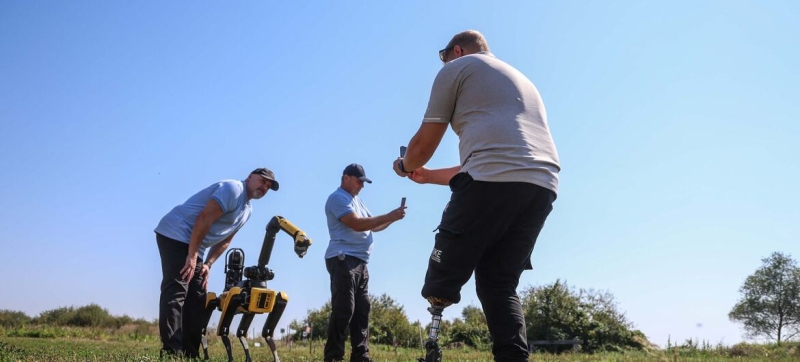

Even if the war on Ukrainian territory ends tomorrow, its consequences will be felt for decades. Invisible threat: how Ukraine fights mines Peace and Security
It is estimated that Ukraine today faces one of the highest levels of explosive contamination in modern history. Vast areas of land – and even water – are littered with mines and unexploded ordnance. This is a legacy not only of the current war, but also of past conflicts.
“Ukraine is one of the most heavily mined countries in the world,” Benjamin Lark, mine action program manager at the United Nations Development Program (UNDP) Ukraine office, told the United Nations News Service. At the same time, he clarifies: the exact scale cannot be determined until the territory is completely cleared.
According to recent estimates, about 132 thousand square kilometers of land and 14 thousand square kilometers of water bodies are polluted, which is comparable to the area of an entire European country. But these figures do not reflect the whole picture – these are indicators of pollution since Russia’s full-scale invasion of the country.
According to Lark, Ukraine has been facing this problem for decades – since World War II. “Almost the entire territory of the country is contaminated to one degree or another,” he notes. The current conflict, according to him, has greatly increased the scale of the problem.
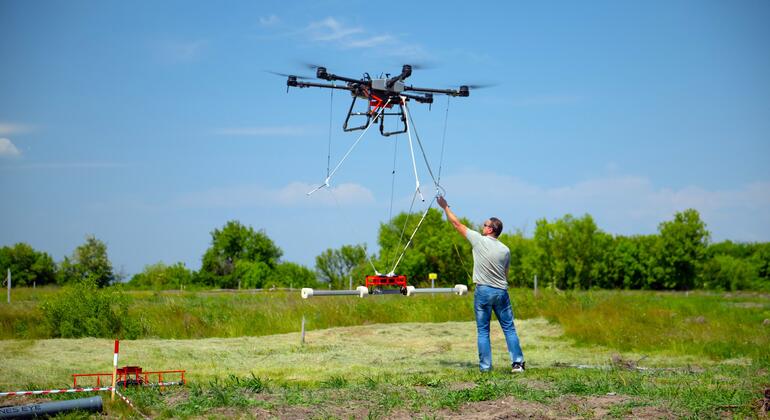
Fighting mines in an ongoing war
The peculiarity of the situation on the territory of Ukraine is that mine clearance is carried out in parallel with military operations – this is an extremely rare case.
“It’s very unusual to be clearing an area of mines in the context of a full-scale conflict,” Lark says. Areas cleared in 2022 are now being cleared, but along the front line the scale of contamination continues to increase every day. This means that the task is constantly changing: some territories become relatively safe, while in others the danger grows.
The media often hear estimates that it will take hundreds of years to completely clear Ukraine of mines. However, Lark considers such forecasts to be incorrect.
“Such assessments are essentially meaningless,” he says. The main thing, the expert emphasizes, is not the complete elimination of all ammunition, but the reduction of the threat: preventing deaths and injuries, restoring agriculture and infrastructure.
In the accessible areas where there is no active hostilities, noticeable progress is already being felt. Lark estimates that within “about 10 years,” such areas could become safe in terms of impact on the population, even if some munitions remain. with explosive objects, but the scale of the task has grown sharply. Various ministries, services, international organizations and private companies are involved in the process. Coordination of their actions is a key task.
This is where the role of UNDP is important. The organization does not deal with mine clearance directly, but helps the state organize the work. Activities cover three areas: governance, capacity building and economic development.
Technology accelerates the process
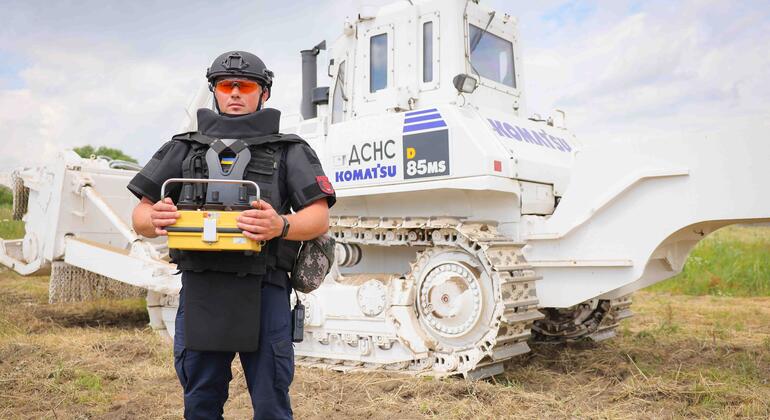
One of the key projects is the GRIT system, an innovative platform based on artificial intelligence. It analyzes data on land use, population movements, pollution levels and other factors to determine where and in what order to clean up. “It can really speed up the process,” says Lark.
New technologies are put into practice. For example, underwater vehicles and sensors are being introduced to clean rivers and reservoirs – an area that previously received less attention.
A separate task is equipment maintenance. Various countries have supplied Ukraine with a large number of machines, and now it is important to keep them in working order.
“It doesn’t sound like exciting work, but it’s extremely important,” admits Lark.
People and Dogs
Despite advances in technology, people remain at the heart of mine action. UNDP trains veterans, including those who have been wounded, to work in mine action, creating jobs and helping them return to active lives.
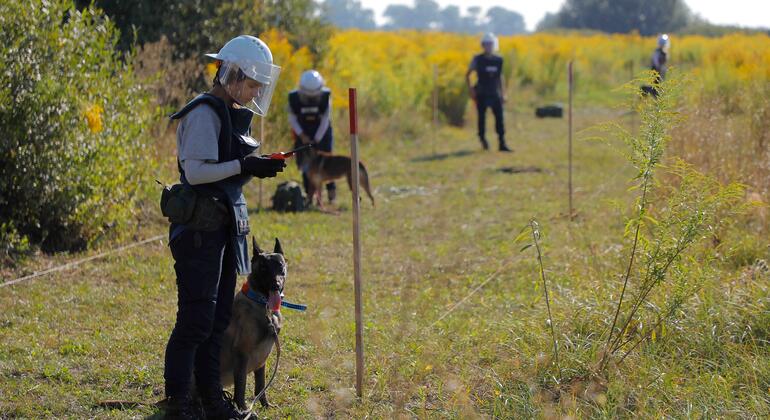
Dogs also play an important role. One of the symbols of this work was the dog Patron, whose fame spread far beyond the borders of Ukraine. But he is not the only four-legged hero. Specially trained dogs can, in some cases, survey an area tens of times faster than a human.
“It’s not a universal solution, but it’s an important tool,” says Lark.
Mine clearance in an economic context
Mine clearance is not only a matter of security, but also of economic development. Without land cleared of mines, it is impossible to develop agriculture, build enterprises and attract investment. Therefore, UNDP supports the development of the demining sector in Ukraine.
They also rely on domestic production of equipment as part of the “Made in Ukraine” initiative. The goal is to create a sustainable system that can operate independently in the long term.
Decades of work ahead
Even if the war ends tomorrow, its consequences will be felt for decades. World War I ammunition is still being found in Europe – more than a hundred years later. Ukraine will likely face a similar reality. However, the task is clear: not to eliminate absolutely everything, but to make people’s lives safe.
“This is a huge problem,” says Lark, adding that it is already clear that with the right coordination, technology and international support, Ukraine is able to cope with this challenge step by step.