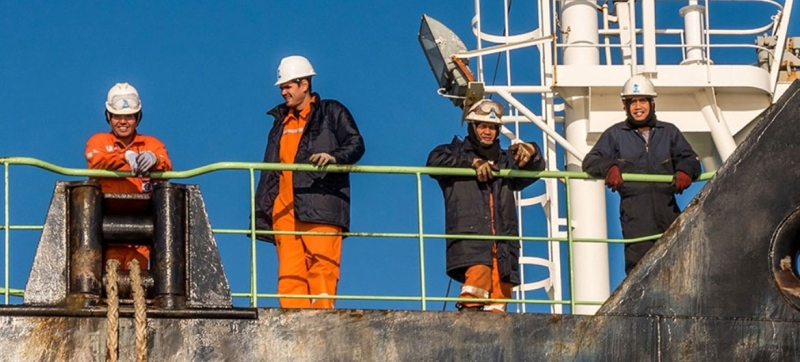

Before the start of the war, about 150 ships passed through the Strait of Hormuz every day, now no more than five. There is an “unprecedented situation” for sailors in the Strait of Hormuz Daniel Dickinson Peace and Security
Amid the ongoing war in the Middle East, about 20 thousand sailors remain blocked on ships in the Strait of Hormuz – and this is an unprecedented situation for the entire period after the Second World War. Approximately two thousand ships are stuck in the strait, including oil and gas tankers, cargo ships, and six tourist cruise ships.
Iran, which controls the northern side of the strait, says it will not allow ships from “unfriendly” countries to pass through. Before the war, about 150 ships passed through the strait every day, now no more than five. On Monday it became known that two cargo ships flying the Chinese flag began crossing the strait into the Gulf of Oman.
Ships at gunpoint
Since the conflict began a month ago, 19 attacks on ships have been recorded in the strait. This was reported by the London-based UN International Maritime Organization (IMO). As a result of these incidents, seven sailors were killed, eight were injured, and five are listed as missing. A fully loaded oil tanker was hit off the coast of Dubai on Tuesday. Presumably, it was hit by a drone. The reasons why these particular 19 vessels were targeted remains unclear.
Attacks have decreased in the past week as diplomatic efforts to resolve the crisis have intensified.
“No precedent”
At present IMO – the specialized UN agency responsible for the safety of international shipping is engaged in the evacuation and protection of 20 thousand sailors caught in the combat zone.
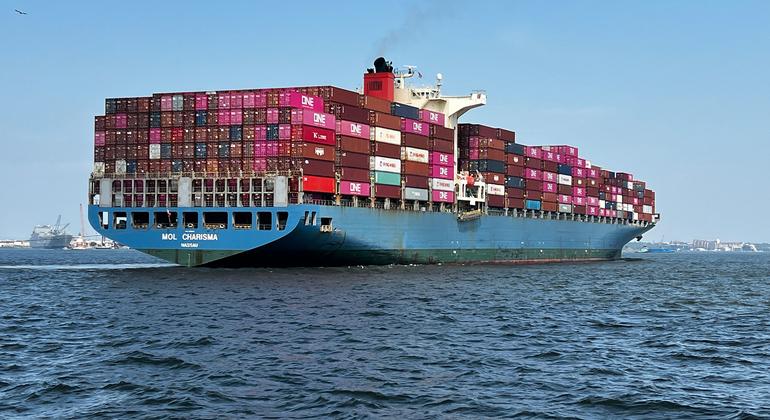
“There is no precedent in modern history for so many seafarers being stranded,” said Damien Chevalier, Director of the IMO Maritime Security Department. “We call on all parties to the conflict to stop attacks so that the sailors can be evacuated to safe areas.” They have been working in an active combat zone for a month now. This is an extremely frightening situation, and one can only imagine the psychological pressure they are under.”
The International Transport Workers’ Federation, which represents seafarers, said it has received more than a thousand letters from stranded crews complaining about conditions and asking for help to return home. “Theoretically, one could try to replace the crews to keep the ships operating, but in that case the companies would have to look for volunteers,” he said. Chevalier.
He stressed that the best solution would be the safe passage of ships through the Strait of Hormuz, but this will only be possible after the cessation of hostilities.
Negotiations are underway
Ships in the Persian Gulf receive food, water and fuel from companies operating in Saudi Arabia and Oman. Saudi authorities, in conjunction with the IMO, have provided shipping conglomerates with information on how to contact them.
It is not always safe to remain in ports, so ships are moving around the Gulf in search of more protected places, following the instructions of their companies.
The International Maritime Organization has asked Iran for clarification on the matter what kind of ship the authorities of this country consider “hostile”.
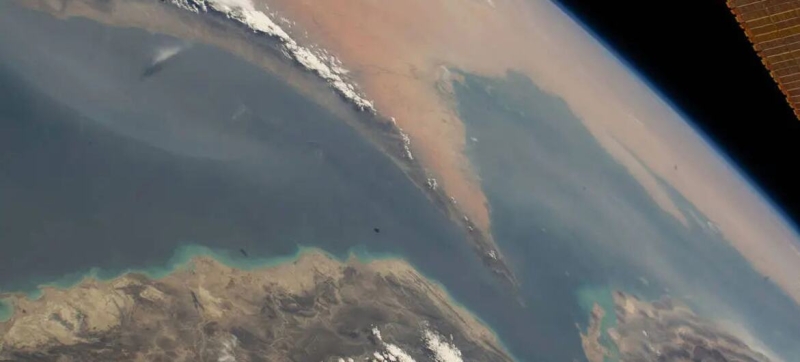
Satellite image of the Strait of Hormuz.
Critical Route
The Strait of Hormuz is critical to the world economy, with about 20 percent of the world’s oil and gas supplies passing through it. south of the strait. This is the safest route through the narrow sea corridor. However, some ships that did pass through the strait chose the northern route, closer to Iran, so that the authorities in that country could monitor their movement.
In the short term, the IMO is committed to ensuring the safety of all crews stuck in the Persian Gulf. But long-term plans are already being developed.
“If seafarers don’t feel safe because of conflicts like these, the industry will have a hard time attracting a new generation of talent while demand grows,” Chevalier explained. “Without seafarers, world trade, on which the economies of all countries depend, cannot exist.”