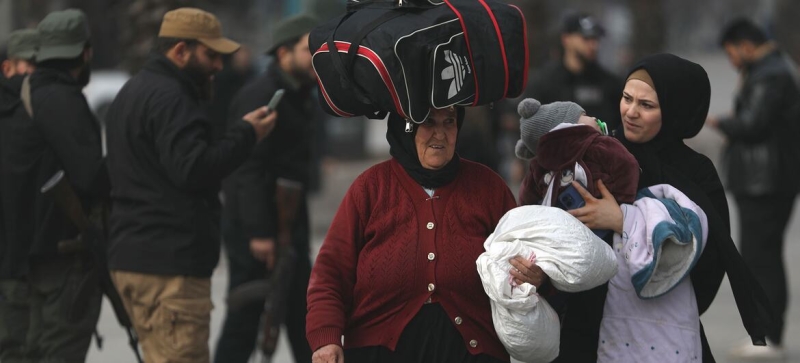

People arrive in Syria exhausted and with minimal belongings. Humanitarian crisis in the Middle East: a threat to global food supplies Humanitarian aid
A month after full-scale fighting began in the Middle East, UN agencies warn that critical humanitarian aid supplies to conflict zones, including Sudan, could be disrupted.
Attack on an oil tanker off the coast of the UAE
The International Maritime Organization (IMO) reported an attack on another ship in the Strait of Hormuz. The latest target was a fully loaded Kuwaiti oil tanker. As a result of the impact, a fire broke out on board the tanker off the coast of Dubai.
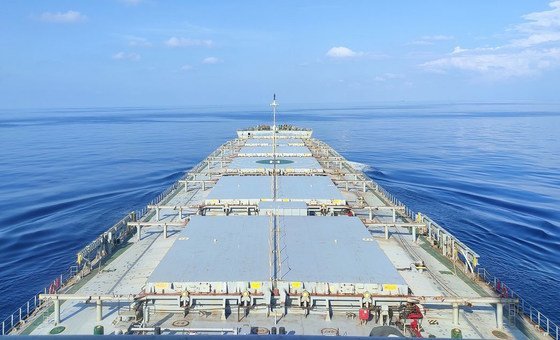
The crew is reported to be safe and there is no threat of environmental pollution.
To date, 19 attacks on ships have already been confirmed in this water area – a key transport artery through which about a fifth of all oil and gas in the world passes.
The IMO expresses deep concern about the fate of about 20 thousand seafarers aboard the 2,000 ships blocked in the strait. IMO representative Damien Chevalier in an interview with the UN News Service called the current situation unprecedented: this, according to him, has not been seen since the Second World War.
Logistics collapse and the threat of famine
Since the beginning of the war, humanitarian organizations have warned of the catastrophic consequences of the crisis for the most vulnerable groups of the population in countries where a crisis situation has already developed.
Today the UN World Food Program (WFP) stated that these fears have already become a reality in Sudan, South Sudan and Somalia. Humanitarian operations in these regions are on the verge of collapse due to increasing delivery times and soaring costs. About 70 thousand tons of food intended for those in need are blocked due to the fighting. The cargo is on ships that are currently unable to leave ports. For example, WFP previously delivered aid to 17 million people in need in Afghanistan transiting through Iran. Now the agency is forced to redirect cargo by road from Dubai through Saudi Arabia. The situation is aggravated by a multi-year funding gap. “Our reserve stocks are completely depleted. We literally live one day at a time,” WFP spokeswoman Corinne Fleischer told reporters in Geneva. 200 thousand people. Most of them are fleeing massive Israeli bombing of Beirut and other parts of the country. Speaking in Geneva, UNHCR representative in Syria Assir Al-Madayen stressed that people are crossing the border “completely exhausted and in a state of severe shock,” leaving almost all his property.