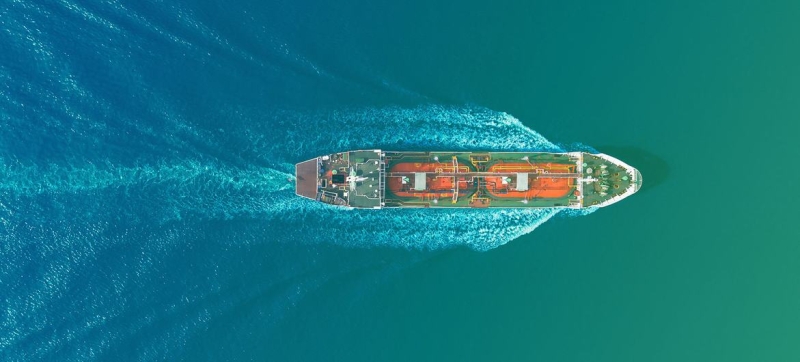

About a quarter of the world’s seaborne oil supplies and significant volumes of fertilizers pass through the Strait of Hormuz. UN mine action expert warns of new threats in Strait of Hormuz Peace and Security
Clearing sea mines remains an “extremely difficult and extremely dangerous” task today. Paul Heslop, a senior technical expert with the UN Mine Action Service, said this in an interview with the UN News Service, answering questions regarding the ongoing conflict in the Middle East.
Despite the lack of confirmed data on the deployment of sea mines in the Strait of Hormuz, fears are growing: the water corridor through which about a quarter of the world’s seaborne oil supplies and significant volumes of fertilizers passes remains closed to most ships. The war between the United States and Israel with Iran, which has affected a number of other states in the region, sharply increases the risks for international trade. According to Paul Heslop, Iran had a significant arsenal of sea mines even before the conflict began. Their placement does not require large resources – a fishing vessel or a small trading boat is enough. UN Senior Technical Adviser on Mine Action Paul Heslop. The expert noted that sea mines pose a more complex threat than land mines. They can be placed on the surface, in the water column or on the seabed. Floating mines are subject to currents and can change location unpredictably, and some models are equipped with a motor. They are activated upon contact with the ship’s hull or under the influence of a magnetic field, remotely or using a timer. “Sea clearance is work not only in three dimensions, but also in the fourth – in time,” Heslop emphasized. Even after the site is completely cleared, it can be re-contaminated due to the movement of mines along currents. According to the expert, metal mines can be detected using magnetometers. Modern systems also use sonar and radar. At the same time, the temperature layers of the water can reflect or distort the signal, which greatly complicates the search. “That is why the detection and neutralization of sea mines remains extremely dangerous for the ships performing this work,” Heslop noted. Most of the world’s navies have mine countermeasures capabilities, but the current conflict in the Middle East has coincided in time with the transition from traditional minesweepers to new technologies – underwater drones and robotic systems. The convoy will probably operate in a corridor a couple of kilometers wide, completely cleared of mines,” the expert explained. “We are not talking about cleaning every square meter of the Strait of Hormuz every day. And obviously, depending on currents and tides, some areas will be more likely to be re-infested than others.”
“Working in Four Dimensions”
Difficulties of detection
New technologies