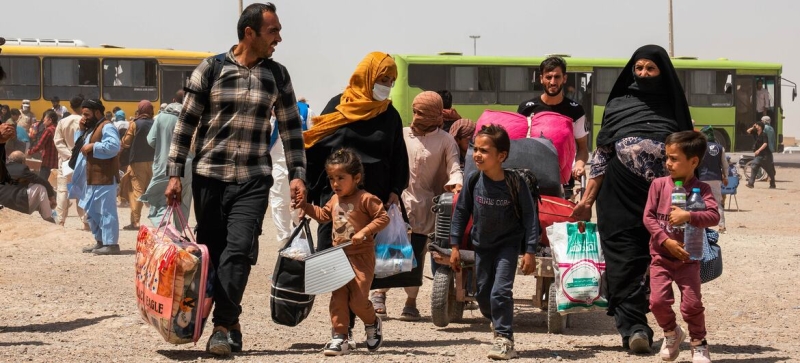

Afghan families returning from Iran to Afghanistan. The situation in Afghanistan: clashes on the border with Pakistan, an influx of returnees from Iran Peace and security
The intensification of hostilities on the Afghan-Pakistan border, as well as the escalation associated with the crisis around Iran, has led to a deterioration in the humanitarian situation in Afghanistan, the UN World Food Program (WFP) reports.
Clashes along the approximately 2,400-kilometer border with Pakistan have displaced approximately 20,000 families in the eastern, southeastern and southern regions of Afghanistan.
Ground and air strikes have affected more than 30 districts in the provinces of Nangarhar, Nuristan, Kunar, Laghman, Paktika, Paktia, Khost, Kandahar and Helmand. In all of these provinces, WFP was forced to temporarily suspend social support measures, school feeding programs and livelihood projects.
“You may remember the earthquake that occurred in eastern Afghanistan on August 31st. Mountain communities in Kunar and Nangarhar provinces – already some of the most vulnerable – have been hit the hardest, losing family members, homes and sources of income. Today, it is these same communities that are once again on the front lines of the crisis – now amid an escalating conflict with Pakistan,” said John Ayliffe, WFP Country Representative for Afghanistan. returnees from this country, which is at the center of escalating violence in the Middle East.
“We already saw a similar surge in returns during the intensification of hostilities in June 2025. For many, returning to Afghanistan means not only poverty, unemployment and hunger, but also instability,” Ayliffe said.
Saeed Aziz, a 36-year-old father of four, returned from Iran just a few months ago. There he received a modest salary at the factory, but was able to feed his family. In Afghanistan, he has no home, no job, and on some days, nothing but bread. Aziz was recently injured and is now unable to work, while restrictions in Afghanistan prevent his wife from working. His family now survives on WFP assistance.
“His story shows how returnees—already vulnerable—are once again faced with instability, poverty and hunger,” Ayliffe said.
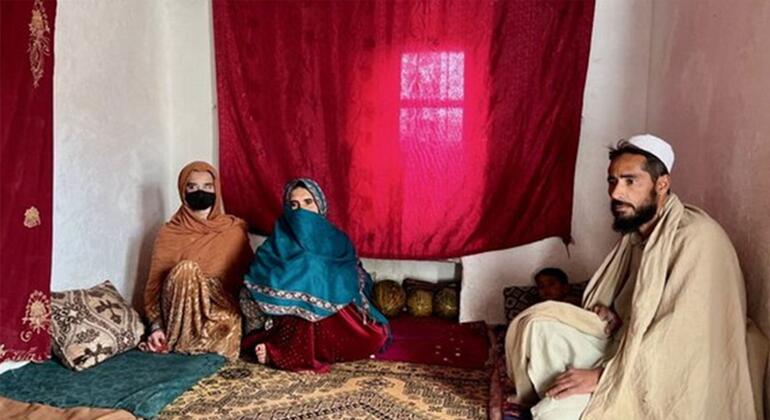
In 2025, WFP supported more than half a million Afghan returnees along the border with Iran and Pakistan. Aid included cash transfers and food for women and children.
More than 2.5 million people from Iran and Pakistan have already returned to Afghanistan in 2025. Even before the escalation, analysts had predicted a similar influx in 2026, but the resumption of hostilities could lead to an even greater influx of refugees, putting an unbearable strain on the humanitarian response system.
Afghanistan remains one of the world’s leading hunger hotspots, with one in three of the country’s 17.4 million people in dire need of food aid. Rates of child malnutrition have also reached alarming levels, with 3.7 million children projected to require treatment in 2026.
With the looming crisis and funding shortfalls, WFP is unable to help families fleeing Iran and Pakistan, or those forced to flee their homes inside Afghanistan due to cross-border conflict.
WFP warns that the organization’s emergency operations funds will run out by April 2026, leaving millions without support.
The World Food Program needs $313 million for its operations in Afghanistan. The organization calls on the international community to fulfill its obligations and allocate the necessary funds.