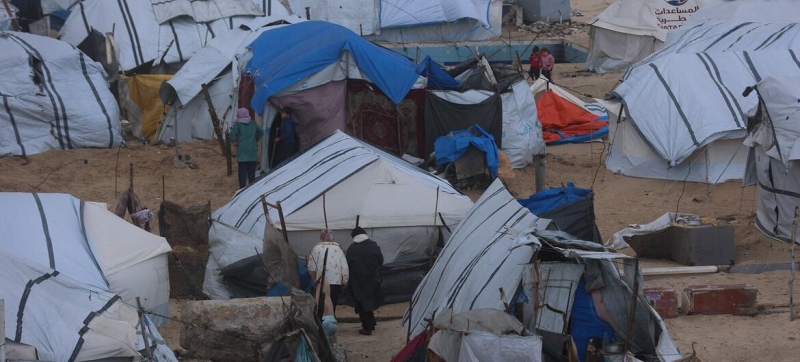

IDP camp in Gaza. UN representative on the critical situation in Gaza: “Every minute matters” Humanitarian assistance
U.N. Office for the Coordination of Humanitarian Affairs (OCHA) spokeswoman Olga Cherevko briefed reporters on Wednesday about the ramping up of aid to the people of Gaza – despite numerous obstacles.
According to Cherevko, since the ceasefire, almost 200 thousand tons of humanitarian aid have been delivered to the sector. Food assistance reaches more than a million people every month, and 1.6 million Gazans receive hot meals every day. Dozens of health centers have reopened and hundreds of temporary learning spaces have been created. However, as the OCHA representative emphasized, these achievements remain fragile, and the gap between the needs of the population and the ability to safely and sustainably deliver aid is huge.
Shelling and cold
The situation on the ground, she continued, remains extremely difficult. Continued airstrikes, shelling and gunfire are killing and injuring civilians. Harsh winter weather claims the lives of children.
Most Palestinians in Gaza live in conditions of forced displacement and extremely difficult living conditions. The approaching month of Ramadan, traditionally a time of joy and reflection for Muslims, will be marked by the consequences of the recent war for many in the sector.
Restrictions on NGO activities
Humanitarian organizations, according to Cherevko, face serious restrictions in their activities. Direly needed supplies of medical supplies, tools and materials for home repairs, equipment for clearing rubble and spare parts remain strictly prohibited. Communication disruptions complicate coordination and emergency response. Damage to roads, warehouses, water supplies and medical facilities is limiting the ability to store and distribute aid.
People in overcrowded shelters and makeshift tents are barely surviving as new downpours threaten to destroy their shelters. According to Cherevko, suffering could be alleviated more quickly and on a larger scale if existing restrictions were lifted.
The OCHA representative stressed that there is no need to create new assistance mechanisms now, but rather remove obstacles that hinder the work of humanitarian organizations. Among the key conditions, she named safe access to the sector, the lifting of restrictions on supplies, including dual-use goods, the organization of reliable travel routes within Gaza, sustainable financing and support for early recovery. lives, but only if obstacles to the delivery of aid are removed. Every delay, refusal or interruption increases the suffering of civilians. She also urged “not to be indifferent to the pain of those who are suffering now” and not to allow Gaza to become a minor “noise” amid other world crises.
“Help is ready [to be sent]. There are reserves. Workers are on site. Every minute matters,” concluded the OCHA representative.