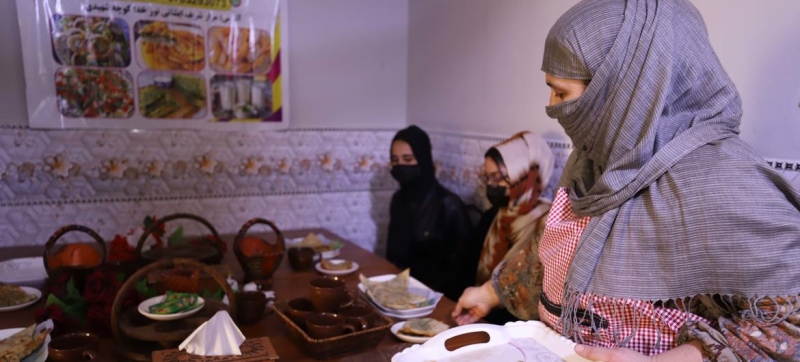

The Shaista Hakimi restaurant in Mazar-i-Sharif is open to women only; men order online. Despite the bans: Afghan women continue to successfully do business Women
How to continue to work, or even more so, manage your own enterprise, when obstacles await you at every step? Many women in Afghanistan are asking this question today. De facto authorities have introduced many bans in the sphere of education and employment. Small business remains almost the only outlet for women who want to be independent. But even here they encounter barriers.
“Women don’t want to just sit at home. They want to get out, to learn something,” says Parveen Zafar, a tailor shop owner in the northern Afghan city of Mazar-i-Sharif.
Women are officially banned from working in government agencies, NGOs and the UN. Many of them are forced to do their work from home.
Small business is the only opportunity
Small business, especially in areas that are traditionally considered female – textile and food production, carpet weaving – is the main outlet for Afghan women who strive for financial independence. De facto authorities and society consider such activity acceptable.
“The only channel that Afghan women have is small business,” says Parvin.
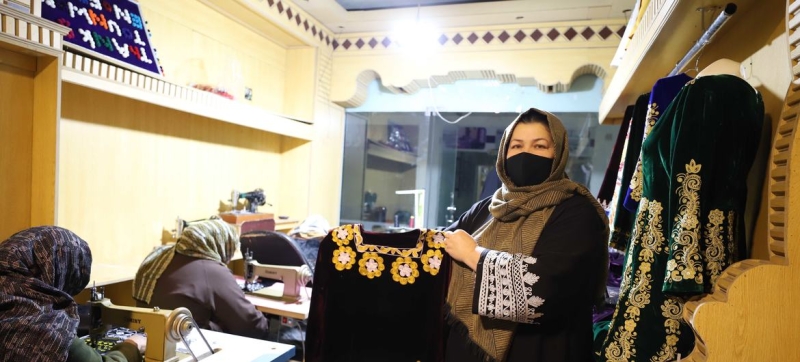
Parveen Zafar in his studio in Mazar-i-Sharif. The company employs 16 women.
“Historically, they have been engaged in these types of activities, and society does not question such traditional enterprises,” explains Wahib Al-Eriyani, head of the regional office of the United Nations Development Program (UNDP) in Mazar-i-Sharif.
UNDP actively helps Afghan entrepreneurs: more than 89 thousand companies have received support, 91 percent of them are headed by women. These efforts created over 439 thousand jobs.
“People will laugh at us.” She lost her husband two years ago, and now her father-in-law demands that she move out of their shared home: he is afraid of judgment from society.
“He says people will laugh at us because his daughter-in-law works,” explains Shaista.
Support from UNDP
Having received a soft loan from UNDP, Shaista was able to maintain her restaurant despite all the difficulties and now hopes for further support.
She applied for a matching grant program, where resources are provided in exchange for contributions from businesses themselves – such as job creation. Her restaurant employs 18 women.
“I could rent another place or building to live and work in,” says Shaista.
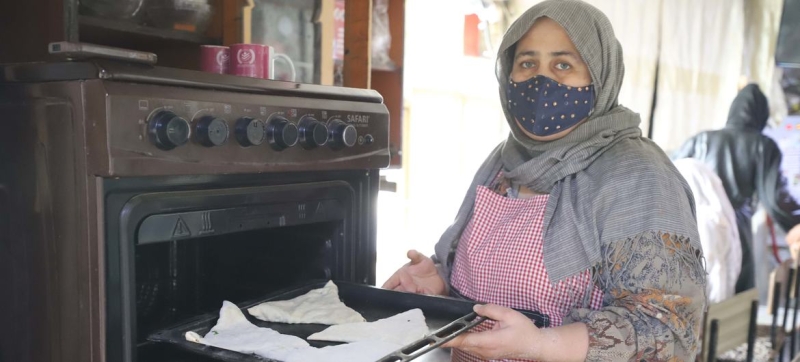
Shaista Hakimi in his restaurant.
Parveen Zafar also received a subsidized loan from UNDP after her previous campaign closed. Her new enterprise employs 16 women.
“I was able to borrow money and buy equipment. Thank God I was able to open my business again. And now I can help other women,” says Parveen.
Having to rely on male relatives
No matter how successful their businesses are, Afghan women entrepreneurs must rely heavily on their male relatives. Afghanistan’s de facto government decrees require women to appear in public or travel only when accompanied by a mahram, a male guardian.
For the women who work at Shaista’s restaurant, this poses no problem. They live in the same area and can walk to their place of work on their own.
But at the Parvin enterprise the situation is completely different.
“Women are not allowed to travel without a mahram. Especially if we want to deliver products to other provinces, we cannot do that,” she says.
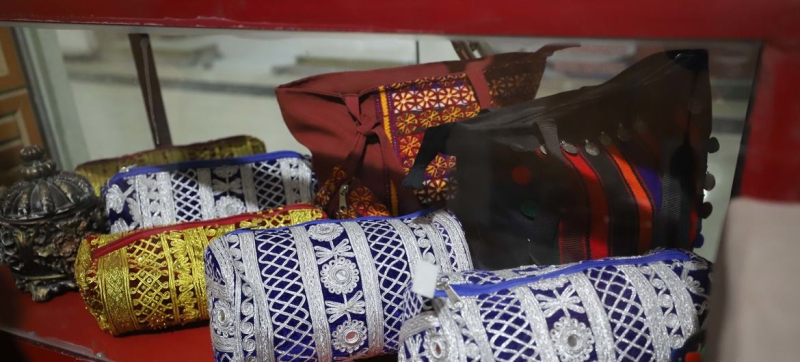
Accessories made in the Parveen Zafar studio.
In such situations, women turn to relatives for help.
“Sometimes, if women cannot get to the market, they involve their husbands, brothers and other relatives who can go to crowded markets, sell products or make deals with wholesalers,” explains Al-Eriyani.
“The men we are related to support us. They are trying to sell our products,” adds Parveen.
“They are very resilient.”
Limited access to markets and financial instruments is one of the main obstacles for businesswomen in Afghanistan. According to the UNDP, only 4 percent of Afghan women have access to the international market, and obtaining a loan requires several guarantors, which many simply do not have.
Still, women find ways to continue their work – and help others. “They are very resilient. They find ways, they adapt,” notes Al-Eriyani.
Today, against the backdrop of the massive return of Afghans from Iran and Pakistan, many women’s enterprises provide jobs to newcomers.
“With the support of UNDP, they were able to employ returnees – 20, 30, 40 women per enterprise. They did it with pride. Now they are not just recipients of help – they are helping others,” says Al-Eriyani.
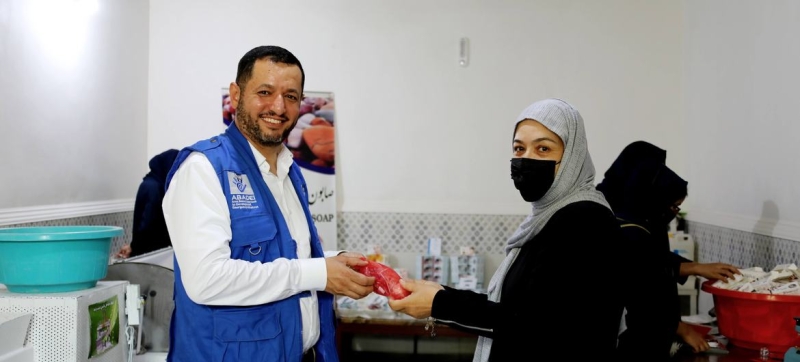
Wahib Al-Eriyani at a woman-led soap manufacturing enterprise.
An Uncertain Future
The prospects for Afghan women entrepreneurs remain dim. Because of the ban on education for girls after the sixth grade, the younger generation will not have the knowledge and skills needed to run a business.
“We don’t have the necessary financial education,” Parveen explained. UNDP is providing training to women entrepreneurs in Afghanistan, but much more is needed to develop their potential.
“The support we are receiving today is not enough,” she added. Parveen stressed that Afghan women need greater international support.